Wound Care In Anthroposophically-Extended
Nursing - A Case History (Original title: Wundbehandlung in der anthroposophisch erweiterten PHege. Eine Kasuistik. Merkurstab 1995; 48:351-7. English by A. R. Meuss, FIL, MTA.
Hermann Glaser
JAM Vol. 12, Nr. 4
History
A woman aged 66 with bilateral leg ulcers; legs edematous; according to
pathology reports she had brought with her (a month old) the ulcers were
well populated with microorganisms (Staph. aureus, Enterobacter, Enterococci
and Candida).
Current echocardiogram showed poor LV function with diffuse contraction
disorder, moderately dilated LV and medium degree M insufficiency,
with valve mobility reduced.
The story had started many years before.
Thirty-six years previously, she had a thrombosis of the left leg after her
son was born.
Nine years ago, she had had a serious accident, with the right leg shattered,
requiring three operations; the head of the left tibia had been broken
off.
The patient had been in a trauma ward for 5 months and had been unconscious
for weeks. The leg ulcers had developed when she woke up and
had persisted since then, though varying in extent.
She had sought the help of many physicians and hospitals - to no avail.
Fundamental concepts
Below, an attempt is made to describe our efforts to provide the right level of
nursing care as healing progressed.
The reasons for choice of substances can only be touched on briefly, but it
is hoped that it will be enough to give a picture. Finding the indicated medicines
in anthroposophic medicine and nursing has less to do with chemical
analysis than with the endeavor to study minerals, animals and, above all,
plants and perceive their essential nature and qualities.
It should be explained that we do not consider microorganisms in the
wound to be a causal factor but, rather, indicative of the changed environment,
with the balance upset. Foreign elements can only come in if the secure
harmony has gone.
Clinical course
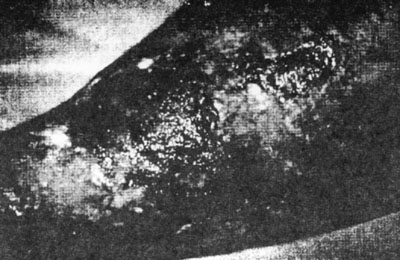
Day 1: Patient admitted by reference persons among nursing staff and the
ward physician. Treatment started the same evening.
Both legs were first of all covered with roller-crushed white cabbage
leaves, with absorbent compresses over these and elastic bandages to hold
them in position.
- The edematous swelling was our main concern for it signified
slowed-down metabolic processes in the leg. This would prevent
healing by interfering with tissue circulation and nutrition.
White cabbage presents an image of watery stasis (more than 90% water,
heavy, tautly filled, spherical ...); it can stimulate the organism to guide
fluids back into their proper channels. (Also effective in treating lymphostasis,
rheumatic swellings, etc.).(1)
Day 2: Purulent discharge seen when dressings were changed easily wiped
off with saline. Disinfection (with H2O2 or similar) was decided against,
experience having shown that it delays healing.
Patient spoke of slight pain in wound area which until then had been
without sensation.
- We rated this a positive sign. We often find that wounds (e.g. also
bedsores) will only heal when bodily sensations return to these
"neglected" areas, even if initially they are excessive.
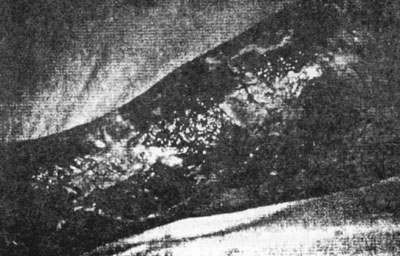
Day 3: Legs much thinner; whole skin area slightly irritated, with pruritus.
The time had come to bring a second active principle in white cabbage
into play - its powerful wound-healing properties.
- For this, clean cabbage leaves, their ribs removed, were cut to size
slightly smaller man the open wounds, crushed, and then placed
on the wounds. The area around the wounds was left free to
recover, allowing wound secretions to drain off freely (Fig. 5) and
be absorbed by the (absorbent) compresses placed on top. Dressings
were changed about every 12 hours, with residual secretions
washed off with 0.9% saline.
Aching pain may develop during the cleansing phase. Apart from this
the action is essentially soothing, softening and cleansing, promoting healing.
Cabbage sets stagnant processes in motion.
Key phenomena suggesting the use of this plant in wound treatment are
its enormous vitality (see large number of varieties, high vitamin content,
long shelf life, etc.), constant battle with "stresses" (e.g. many specific cabbage pests and diseases), the protective, enveloping gesture of the "skin-
like" leaves, plus many other aspects we cannot go into here. The cabbage
leaves are able to give the wound what it lacks; and the cabbage pieces
usually look quite used-up when dressings are changed.(1,5)
Day 4: Wounds showed good blood supply; fibrin coating, fresh granulation
tissue, and small islets of epithelium. Wound margins treated with Calendula
Ointment (Products manufactured by Weleda AG, Schwaebisch Gmuend, Germany).
The herbaceous part of garden marigold is watery, sappy, some-
what chaotic; the flower emancipates from this, showing strict or-
der; brightly colored, it connects with the light rhythm of the day (closing when it rains, in darkness, etc.).(2) The ointment made with
the highly vital herbage is attuned to regeneration of tissues,
"filling them with sap" - starting from the margins, above all with
wounds that look tom-up. It also helps to relieve wound pain.
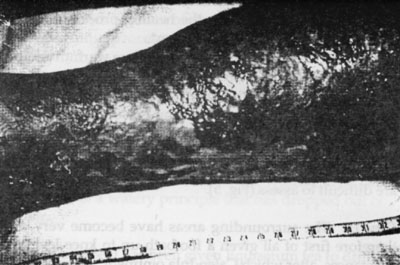
Day 8: From this day the wounds were left uncovered for 2 hours between
dressing changes. Less of the foul secretion developed.
- Contact with air supports the vital process of tissue regeneration
(viz. O2 as the vehicle of life, N as a specific element in human protein) and morphogenesis (viz. water vapor/fog forming clouds).(3)
Day 9: To utilize the additional anti-inflammatory and drying/astringent
properties of zinc oxide(4) in the healing process, the wound margins were
treated with Calendula Baby Cream. (The cream contains Calendula and in addition chamomile which has special warmth qualities (viz. blue volatile oil) and, among
other things, a soothing action on the skin.)
Volatile oils draw blood and therefore warmth and nutrient substance to
the site of application. Bees wax, another constituent, is a warmth substance
that provides a protective covering. Wool wax is related to human skin fats
and has the highest water-binding capacity of all natural fats. It does not
interfere with skin respiration and is a constituent of all the ointments we
used.(4)
The use of zinc ointment means that the areas surrounding the wounds
are difficult to assess (Fig. 5).
Fig 4, Day 14:
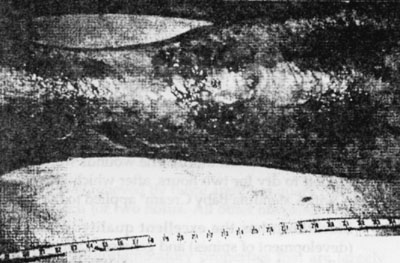
Day 15: The surrounding areas have become very dry. The patient was
therefore first of all given a footbath up to knee level containing no added
substances, after which Calendula ointment was again used for a time.
Water is known to have therapeutic properties, being a vehicle for
warmth, light and life (e.g. Kneipp treatments). It combines two principles
important for wound healing - solution (e.g. "self cleansing power" of
oceans) and morphogenesis (e.g. surface tension/droplet formation/development
of river beds).(3)
Day 18: Progress had been excellent and we therefore tried to force the
process.
In the mornings the patient would have a knee-high footbath with
Primus Bath Lotion (blackthorn). The wounds were then cleaned with 0.9%
saline and left to dry for two hours, after which cabbage pieces were placed
on them, with Calendula Baby Cream applied to the wound margins.
- Blackthorn has the excellent quality of being both economic
(development of spines) and generous (abundant fruit) with water.
It flowers before the leaves emerge in spring and bears fruit that
only develops sweetness after the first frost; this indicates great
resilience and powers of endurance.
A bath with blackthorn added to it is warming, vitalizing and gives a
feeling of protection; it pulls together, tautens and counteracts softening of
tissues.
In the evenings. Citrus medica Ointment was rhythmically massaged
into the legs, omitting the open areas. Cabbage dressings were applied after a
rest period.
- Special rubs given rhythmically are a specific method developed in
anthroposophically extended nursing. Substance is applied with
deliberately-used touch and movement qualities to call on the
harmonising powers of the human organization. The method bases
on a study of rhythmic processes, using their qualities in the
treatment.
- Citrus medica Ointment contains lemon juice. Compared to the
whole tree, which branches widely, its leaves austere, its flowers
pouring out sweet scent, the fruit is firmly organized and
concentrated. The acid fruit juice develops through limitation and
delimiting of the rest of the plant where the fluid element is
concerned. External applications of it in the wound area can
support organization of a watery principle that has dropped out of
the normal order.
Day 22: For a day now, the patient has been given Equisetum tea to drink.
- Horsetail shows the clear lines of the stem principle, containing
numerous air ducts, and its morphology is highly rhythmic. The
high silica content is important (40-90% in the ash).(6) Silica is closely
connected with centripetal surface-configuring processes (viz. silica
content of hair, nails, feathers, spines).(3) Given in form of Equisetum
tea, which primarily supports kidney function, it also helps the skin
to develop its protective and delimiting functions.
Patient had severe pain in the wounds by evening, and felt that the areas
around the wounds were hot and inflamed.
Day 23: The pain was quickly relieved by twice applying quark (soft cheese)
compresses to both legs, each for two hours. All other measures omitted for
two days.
- Quark has cooling, antiinflammatory properties that are largely
due to the cooling effect of evaporation and the lactic acid content.
Because of the possible reaction the day before, the patient was now
given birch leaf tea.
- In the birch, hardening tendencies are pushed entirely into the
bark, the leaves retaining their juvenile elasticity. The tea (also used
for spring cures) helps to produce urine. In the present case it was
given to strengthen the vital form-giving forces required for
granulation and epithelialization.
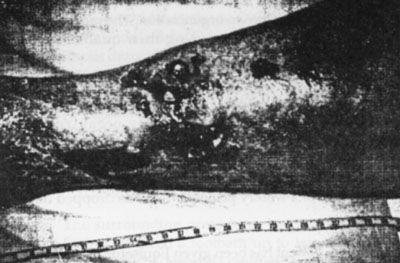
Fig. 5: Day 24.
Day 25: Footbaths continued with a milder addition of Calendula flowers,
with Citrus medica applications also continued.
Day 27: An attempt to simplify procedures by using Varihesive hydrocolloid
dressings (carmellose sodium) failed because the patient took fright at
the blisters developing on the plates. She insisted on a return to the methods
used before.
Day 28: The reference person among the nursing staff was away for a tune. A
third, experienced male nurse was therefore asked for advice. This led to the
idea of bringing the Equisetum process to bear in form of moist dressings using the essence. Elastic bandages were now applied to both legs when the
patient got up.
A smear taken from the wound area that day showed pathogens reduced
to Staph. aureus. The other pathogens were no longer demonstrable.
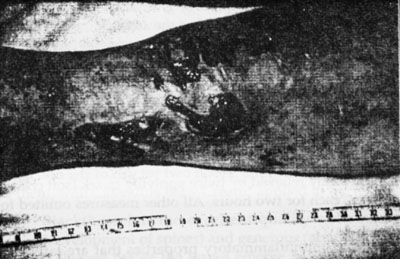
Fig. 6: Day 31.
- As already stated, garden marigold flowers contain a powerful
ordering principle.
Day 31: Changing the Equisetum essence dressings to ointment compresses
was probably responsible for a further short-term inflammatory reaction.
Day 35: Progress had come to a halt and Wecesin Ointment therefore
replaced the Citrus medica. This is a special preparation which apart from
Calendula herb also contains quartz (viz. clear structure of rock crystal),
Arnica, Echinacea purpurea (purple coneflower) and Stibium (antimony).
- Arnica is a well-known medicine for contusions, sprains, etc., when
fluid processes (edema) go beyond their boundaries and form-
giving forces are needed to stimulate restoration of form. The plant
also has a high silica content. Its rhizome presents a configuration
similar to the spinal cord with efferent nerves. Arnica supports the
neurosensory skin functions.(2)
- Echinacea preparations are used for all processes involving
inflammatory or febrile complications, not as an antibiotic or
antiseptic but to enhance resistance. The plant shows remarkably
well-controlled vegetative forces, though always close to the point
of becoming rigid.(2)
- Stibium has a finely fibrous, radiant structure, looks young and
"lively," like hoarfrost in appearance, and has a special affinity to
air and warmth. (Hoarfrost develops when mists condense suddenly,
omitting the fluid phase). Its medicinal use is a structuring
counterpart to unformed protein processes, when the "integrity of
the human individuality is in danger."(3)
Day 39: Until now, cabbage had been the only treatment in continuous use.
The condition of the wounds was greatly improved, and with a view to the
patient soon being able to go home, another attempt was made to use
Varihesive hydrocolloid dressings, as these would enable the patient to
continue treatment herself. As an experiment, the wound area close to the
knee was treated with Quercus essence (oak bark) instead of cabbage and
Varihesive. This resulted in marked deterioration (Fig. 7).
- Oak bark radiates marked earthiness. It was probably used too
early and therefore had a necrotizing effect. Oak bark is excellent in
supporting firming of the epidermis in very superficial wounds.
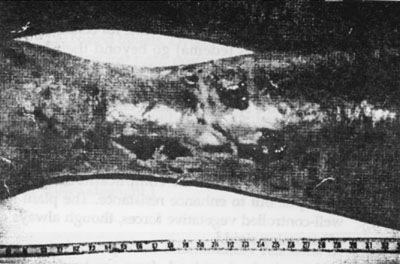
Fig. 7: Day 42.
Day 42: Patient was discharged. She now looked after her legs herself, using
hydrocolloid dressings.
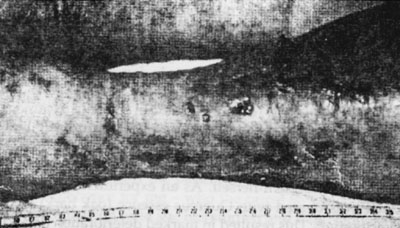
Fig. 8: Day 49.
Day 49: Outpatient checkup. Positive evolution continues, with the ulcers
almost closed (Fig. 8).
Supplementary treatment
For general support, the aim was all the time to set the sluggish eliminatory
processes in motion (lactulose, teas. Solidago dil.) and provide cardiovascular
support (Hamamelis tablets, Scilla dil.. Oleum Strophanthi forte capsules,
Venalot depot [Melilotus, rutoside] capsules, Miroton forte [Scilla, Convallaria. Oleander, Adonis] coated tablets, Dytide H [triamterene] tablets).
Physiotherapy (help to develop right posture and movements at work,
which involved much standing and desk work) and rhythmic Hauschka
massage alternated daily. The patient had asked for eurythmy therapy
exercises, and these were worked out with her in the last one and one-half
weeks of her inpatient stay. (Compared to physiotherapy, which develops
the statics and dynamics of the body, eurythmy gives experience of how
body, soul and spirit are involved in movement, and the exercises can help to
vitalize a body that has grown stagnant.)
Rhythmic "episodes"
During the inpatient period, unexpected inflammatory reactions developed
five times at intervals of about one week. Looking back, these do not really
appear to have been connected with specific substances (allergy or the like)
but to have been a positive reaction of the organism to having its self-healing
potential challenged and "revitalized."
Nursing care
Writing up a case history such as this may in many respects appear schematic.
I feel it is important to stress that nursing care and treatment might/
must have been entirely different in the case of another individual. The same
substances may be used for a number of different symptoms, the same
pathologic signs may be treated with many different agents; the issue is
determined not only by who and how the patient is, but also - and this has
been a most important experience for me - who the nurse is, which plants,
substances, methods of application he or she has studied and the relationship
he or she has thus developed to "his/her" nursing and treatment approach.
The basis of knowledge may be held in common, the idea and efficacy of
nursing care continue to be individual.
"Our medical skills depend on the extent to which we are able to wrest
living ideas from dead knowledge and make our healing work our personal
creative deed."(7)
Reflecting on it all I again realized that wound care, too, is not a matter of
wanting to effect repairs, but of following the process with close attention.
Whenever we lost this inner attitude (reference person away, stress
situation in nursing team, etc.) or if the patient did so (stress due to pressure
from family and work sphere), a distinct change, indeed an episode, would
follow. In purely external terms this would take the form of a multiplicity of
substances and applications being used, with the situation difficult to see
through. A clear line of approach and continuity would give markedly better
results. This was also evident from the rapid positive evolution seen initially
(great hope and openness) and once the discharge date was fixed (joy and
relief), i.e. involving a psychological component. "Nursing, rightly understood,
is to act in a way that builds up, accompanying the process, with room
left for true being."(8)
Hermann Glaser, R.N.
Filderklinik
Rogenstr. 80/2.01
D-70794 Filderstadt-Bonlanden
Germany
References
1 MuckH. Der Kohl in deraeusseren Anwendung. Rundbrief Ostem 1994 Verband anthroposophisch orientierter Pflegeberufe e.V.
2 SimonisW-C. Understanding Medicinal Plants.
3 Hauschka R. Heilmittellehre. Vittorio Klostennann.
4 Poulsson E. Lehrbuch der Pharmalmlogie. Leipzig: S. Hirzel 1919.
5 Hegi G. Illustrierte Flora van Mitteleuropa. Muenchen: J. F. Lehmanns.
6 Simonis W-C. Taschenbuch der Hal - und Gewnerzkraeuter. Vittorio Klostennann.
7 Hauschka M. Rhythmical Massage as Indicated by Ita Wegman.
8 Juchli L. Sein und Handeln. Rocom.