When we make a study of the medicinal plants of a family
such as the Solanaceae there is no need to linger over their botanical
classification. We can rely for this on the botanists. There is no doubt that they
have correctly determined the main relationships of the family from the
morphology and histology of the species. But these gross structural
characteristics cannot be correlated to the medicinal actions of the plants.
Poetic observations on the exterior of the plants as clues to their medicinal
actions in the fashion of the signature rerum may seem very attractive to many,
but they have no place in the homeopathic materia medica. The relevant
structures are on the molecular level. To understand the actions from
structural characteristics of the plants, one must take account of those
special chemical products of their metabolism which, being alien, can
interfere with the functions of the human organism. In the Solanaceae these
substances are chiefly alkaloids, i.e. basic products of the amino acid
metabolism characteristic of this family of plants. And it is the structure of
these alkaloids which leads to a natural grouping of the species we use in
medicine.
The most important group is characterized by atropine (or
rather hyoscyamine). We shall discuss only Atropa belladonna, Hyosyamus niger, Datura
stramonium and Mandragora officinalis from among its members; Duboisia and
Scopolia need not concern us here. The second group, characterized by nicotine
is only represented by Nicotiana tabacum; the third, that of the solanine
plants, by Solanum Dulcamara and Capsicum annuum. In the latter, however, other
non-alkaloid constituents must also be considered to play a part in its
actions.
ATROPINE AND BELLADONNA
Let us begin with the biggest and most important group, the
atropine plants. You know everything or at least a great deal about atropine
from pharmacology. But perhaps it would be a good idea to recall some of it and
establish the context. Atropine is the racemic mixture of 1-hyoscyamine and
dextrohyoscyamine. The plants contain only, or almost only, 1-hyoscyamine; the
racemic compound is formed on chemical extraction of the alkaloids. As with
nearly all the alkaloids, the levorotatory form is the more active. We are only
concerned with 1-hyoscyamine. But experimental investigations in pharmacology
and the palliative applications based on them have throughout been made with
the less active atropine.
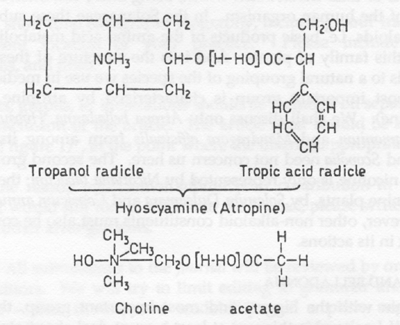
In experimental pharmacology, the inhibiting or paralyzing
action on the parasympathetic nerve endings in muscles and glands has been put
forward as the main effect of atropine. But that is only part of the potential
action, just as, and indeed because, the neuromuscular and neuroglandular
preparations on which this effect is demonstrated form only part of the living
organism. Nevertheless, we may take this as a starting point and see what they
have got to say with regard to therapy. First of all we have the well-founded
theory that atropine is able to inhibit the action of acetylcholine, the
transmitter or parasympathetic impulses. It may not yet be generally
acknowledged, but it is a good working hypothesis that atropine may temporarily
take the place of acetylcholine at the nerve end-plates; perhaps because it is
structurally similar, so that as a structural analogue it would stop the
functioning of the physiological neurohormone. If one looks at the structural
formulae of atropine and acetylcholine side by side, a similarity is not easily
recognizable. Both are esters. The tropic acid radicle of atropine can be taken as a substituted acetic
acid. The atropine radicle, however, is a tertiary compound (derived from NH3),
while choline, a quarternary, derives from NH4OH. Tropine could, however,
combine with halides in the organism to form a quarternary salt. And it has
indeed been maintained that this is responsible for the action. When the large
atropine molecule replaces acetylcholine the physiological regulation of the
transmission of impulses fails because the enzyme cholinesterase is then
ineffective; the parasympathetic blockage persists until the atropine is
eliminated from the system. If atropine is used for its inhibiting effect, no more than a temporary suppression of
symptoms can be expected.
The secretion of the salivary glands is reduced, hence the
dry mouth and throat; the secretions of the mucous glands of the esophagus and
trachea and bronchi, the production of acid and pepsin in the gastric mucosa,
and the pancreatic, biliary and intestinal secretions are decreased to a greater
or lesser extent. The most familiar example of the paralyzing action on unstriped
muscle is that on the sphincter iridis via parasympathetic branches of the n.
oculomotorius. This action is frequently made use of in ophthalmology;
accommodation is paralyzed at the same time through the relaxation of the
ciliary muscle. The forcible widening of the pupil is used regularly, and in
my opinion much too regularly, for iritis; it should be carefully considered
for each case. The tearing or prevention of adhesions is a valid reason, but
the regular administration of atropine to the eye for prolonged periods may
not only provoke conjunctivitis, but even render the iritis more and more
chronic. I have quoted some cases of this type on an earlier occasion, 1 when
the inflammation could only be terminated by stopping the atropine and instead
using Mercur. sol. 3x. In discontinuing the routine of instilling atropine one
must, however, guard against the danger of seclusio pupillae. On the other
hand, the danger of increased intraocular pressure through atropine must also
be considered. Cases of poisoning with psychotic symptoms and damage to the
heart muscle following the local application of atropine to the eye have been
reported.
Now let us consider the action of atropine on the smooth
musculature of the hollow organs. Relaxation of the spasm of the bronchial
muscles in an attack of asthma is only rarely attempted with atropine or
Belladonna, Stramonium being more commonly used. Acute hallucinatory psychosis
has been recorded from overdosage of Stramonium in this palliative use.
Therapeutic doses of atropine have a palliative effect on
spasmodic contractions of the smooth musculature of other organs, too: in the
gastrointestinal tract, bile ducts, ureter, bladder and uterus. Particularly
sensitive to atropine appear to be the parasympathetic nerve endings on the
gall bladder and the sphincter Oddi. The irregular spasmodic contraction in
biliary colic often responds well to Atropine 3x; that is of course also a palliative
action, but after all one does not expect more. It is noteworthy that a
preliminary phase of excitation has been observed following the administration
of atropine, for instance on the uterus, the ureters and the bladder, and even
on the sphincter iridis. My late uncle. J. Leeser, wrote his doctorate thesis
on the primary miotic effect of atropine. One could claim utilization of this
primary stimulant action for the homeopathic action on, for instance, the
gastro-intestinal canal and the bile ducts, an action which we will have to
discuss later for Belladonna and Mandragora. Experimental pharmacology explains a stimulating action on the intestine
via Auerbach's plexus which maintains the rhythm of the peristaltic movements.
The speeding up of this rhythm does not lead to tonic spasms, so that on the
whole the action of atropine is sedative. This might explain why one can
observe from atropine not only temporary relief in spastic obstipation, but a
beneficial action in certain cases of atonic obstipation as well. With such
general statements as that atropine in small doses is a stimulant and in large
doses an inhibitor one does not get far towards an understanding of its mode of
action.
That is particularly obvious in the effect of atropine upon
the heart. In large doses atropine paralyzes the inhibitory terminations of the
vagus; hence the acceleration of the heart action can be seen from atropine or
from Belladonna. This stimulation has occasionally been made use of to relieve
heart block. Such an action cannot very well be called an inhibition through
large doses (as the Arndt-Schulz rule would have it). It is also known since
Schroff (1852) that atropine has a preliminary phase with slowing down of the
pulse. For this effect another point of attack has been suggested, the heart
muscle itself. In a case of toxic psychosis after drops of the usual 1 per cent
solution of atropine sulphate had been instilled into an eye, damage to the
myocardium was indeed established by E.C.G. 2
From the negative cholinergic
actions of atropine on the parasympathetic nerve endings we now go on, or
rather up, to the actions on neuronal centres. About these actions we know
less from animal experiments than from what can be inferred from poisonings in
human beings. There, too, an antagonism to acetylcholine is suspected, but it
has not been proved. It is not an easy thing to prove, since nothing definite
is known about the role of acetylcholine in transmitting impulses within the
central nervous system. Let us take the vasomotor disturbances to begin with.
The scarlatinoid erythema which occurs with atropine and Belladonna poisonings
has not yet been sufficiently explained. It is improbable that it can be
explained by the dilatation of the blood vessels when tissues are irrigated
with atropine solution in animal experiments. A central action would seem more
likely. The increase in arterial blood pressure and a 1-3° C. rise in body
temperature is almost certainly due to central action of the alkaloids. This
stimulation goes hand in hand with the excitation of the respiratory center.
Breathing is accelerated and deepened. Hence the attempt to stimulate the
respiratory center through large doses of atropine in cases of morphine
poisoning. ("Strong stimuli enhance life activities", in contrast to
Arndt-Schultz's rule!) Stimulation of the respiratory center may also be taken
into account for the palliative use of Stramonium for asthma, even if the chief
consideration is relaxation of the spasm of the bronchial muscles.
Finally we come to the cortical excitation elicited by
atropine. Animal experiments tell us little about this. Herbivorous animals and
birds react hardly at all to atropine and Belladonna and experiments on dogs
give a very incomplete picture; the only thing which could be shown was the increased
excitability of the motor centers of the cortex after small doses of atropine.
The main psychoso-mimetic symptoms are well established from atropine and
Belladonna poisonings. (By the way, why did the so-called psychoso-mimetic
action of substances such as mescaline and lysergic acid have to be announced
with much to-do as a new phenomemon when alcoholic, atropine and numerous other
psychoses from drugs had been well known for ages?) The picture of acute
atropine or 1- hyoscyamine poisoning is in the main comparable to that of
Belladonna. The differences only become apparent in the more gradual unfolding
of symptoms by provings on man, and it is fortunate that we have extensive
drug-proving records of both Belladonna and Atropine.
If we now sketch the sequence of events in acute poisoning
as ascending from the periphery to the center, this does not mean that they
always follow the same course. Depending on the sensitivity of the person the
central syndromes may occur first or even exclusively, both with atropine and
Belladonna.
Usually dryness and rawness appear first in the mouth,
sometimes with hoarseness, difficulties in swallowing and nausea; the skin
grows dry, hot and raw, often with a scarlatinoid erythema particularly of the
head and neck, sometimes with prickling and itching. The difficulties in swallowing
may increase until swallowing becomes quite impossible. The pulse is usually
somewhat slowed down to begin with, but later on becomes much faster and combines
with palpitations; the pupil is widened and immobile; the eyes are dry,
brilliant, staring, and may protrude slightly. Headaches and dizziness are
frequent early symptoms, accompanied by a feeling of weakness, heaviness and
tiredness in the limbs. Cerebral irritation
starts with restless, hasty movements, trembling and staggering walk;
this is followed by confused talking, visual and, more rarely, auditory
hallucinations, finally delirium with laughter and crying, paroxysms of rage;
hydrophobia is marked, reminding of rabies. In the terminal stage the ability
to see, hear and the sensitivity to touch may decrease; retching and
incontinence of urine and stools may set in; the acute excitement changes into
convulsions, and finally collapse, coma with greatly accelerated respiration
may lead to fatal asphyxia.
The drug provings have added the finer details and nuances
to this toxicological outline. If the stimulus is applied in planned gradations
of intensity and time intervals the defense reactions of the organism can unfold
gradually and may be studied in detail. And it is these finer nuances which we use as indications for a planned stimulative
therapy. Because of its more elaborate drug picture Belladonna is definitely of
more use to us than Atropine. The effects of atropine are too stormy and too
violent, the reactive range and therapeutic index are narrow. With Belladonna
the action is modified by the secondary alkaloids scopolamine and apoatropine
which are related to atropine. Other substances found in the crude drug may be
even more important, particularly the glycoside scopolin. Its aglucone is
scopoletin (methylaesculin). Such lactone compounds are known to have an action
on the smooth musculature, particularly of the intestine and uterus. It may be
assumed that additional substances in extracts of the plants slow down the
passage of the alkaloid through the organism and allow the gradual unfolding of
the reactions to become more apparent. Such a difference in the development of
symptoms can also be seen between other alkaloid plants and their respective
alkaloids, for instance in the case of Nux vomica and Ignatia on the one hand
and their chief alkaloid strychnine on the other. Atropine itself is mostly
used on fairly gross pathological indications, for instance in achylia gastrica
where one expects a simple reversal to be affected. But when it is a question
of adjusting the remedy to the diseased person rather than to the disease,
Belladonna is more to the purpose.
Individual sensitivity to Belladonna varies greatly. That
has already been noticed in the cases of poisoning; only very few people will
react to atropine eyedrops with psychosis. On an earlier occasion I described
one case of hypersensitivity to Belladonna 6x. 3 One constitutional type, particularly
of women and children, has proved especially sensitive to Belladonna: they
react rapidly, often with high body temperature, are very sensitive to all
external influences, are erethic, sanguine, irritable, usually fair and
full-blooded.
The preliminary stage of sensory and motor excitation has
come out clearly in the drug provings and these symptoms provide good
indications for the use of Belladonna. The patients, usually children, cannot
go to sleep although they feel sleepy, they start up from sleep with fright,
moaning and crying; also talking and walking in their sleep, restlessness and
twitching of the limbs and throwing about can be observed. Grinding of teeth
during sleep has proved to be a particularly good indication for Belladonna.
During waking hours, hyperacuity of the senses makes itself felt, particularly
that of seeing, but hearing, taste and smelling may also appear oversensitive.
It seems that the intraocular disturbances of refraction and hyperaemia of the
fundus coincide with excitation of the visual center in the cortex, or pass
into each other. Flashes of light appear before the eyes, things glitter and
shine, but cannot be clearly distinguished from each other. This excitation
progresses into visual hallucinations, usually in the form of swarms of small animals or even large animals coming
close, as in delirium. The visions grow more importunate on closing the eyes.
In the motor sphere, restlessness, twitching, throwing himself about, incoordination
of speech and walking appear. Loquacity and confused talking are forerunners of
delirium. More rarely the sudden contractions of the muscles of a single limb
go over into general convulsions similar to epileptic attacks. With epilepsy in
overexcitable, "nervous" children I have seen remarkable improvement
from Belladonna.
The Belladonna fever is well characterized. Excitation of
the temperature center combines with that of the vasomotor center in producing
the active hyperaemia which is one of the main characteristics of the
Belladonna picture. The fever comes on suddenly, with dry, burning heat; there
is no preliminary stage of chilliness, or only very little. Sweating is
generally not profuse and can only be noted here and there on covered parts of
the body. Thirst is not marked, it is more a desire to moisten the dry and
sometimes cracked mucosa; the drinking of water brings no relief or only a very
temporary one. The fever comes on suddenly and rises high, the lack of outlet
through sweating and other secretions probably contributing to this. It
generally also drops down to normal suddenly. Belladonna fevers are acute.
The arterial hyperemia of Belladonna need not by any means
have progressed to inflammation and fever. Similarly as with Glonoin the Belladonna
hyperaemia affects preferably the upper half of the body, particularly the
head and neck, whilst the feet are usually cold. The face is reddened, the eyes
are glazed and staring, the widened vessels of the conjunctiva stand out
clearly against the white, and altogether a somewhat wild expression results.
The congestive headaches, fullness, pressure and "bursting" lie
chiefly in the forehead and temples, mainly on the right, and there seems to be
a general preponderance of right-sidedness with Belladonna. The headaches are
often accompanied by dizziness, "like early stages of drunkenness". If in
some books you read that warmth and a warm room ameliorate the headaches, you
may cross that out. There is nothing in the provings or in clinical records to
support this. On the contrary, I have found that Belladonna headaches are
always ameliorated by cold compresses. Cold draughts of air can, of course,
produce other troubles with that marked hyperaemia, just as in the case of
Glonoin. Both Belladona and Glonoin have the strange indication: Wry neck after
haircut, obviously to be interpreted as great sensitivity to cold and draught
of the hyperemic head and neck. But this does not mean that a general aggravation
through cold can be deduced, and even less that Belladonna corresponds to
chilly persons. If neuralgias, of the n. trigeminus for instance, are
ameliorated by warmth, this modality does not signify much for the Belladonna case. Atropine and Belladonna certainly do also
have an affinity to the sensory nerve endings, they can even produce
anaesthesia; the use of Belladonna plasters as an analgetic was formerly very
common. Without any further indications acute neuralgias rarely lead to the
choice of Belladonna.
The other modalities fit well with the hyperemic, congestive
nature of the headaches and the dizziness "as if drunk": they are
worse on bending down and lying down, from any sudden movement, even from
vibration on walking; the Belladonna patient feels better resting in the
upright position; headache and particularly the dizziness are better in the
open air, but worse from heat of sun. Further modalities arise from the great
sensory irritability: touching the head aggravates, the scalp is very sensitive
to touch, less so to steady pressure which may even ameliorate; noise, light
and strong smells aggravate. An aggravation towards evening and at the
beginning of the night applies to Belladonna with regard to the hyperaemia,
inflammatory and febrile conditions.
The early stage of inflammation with marked arterial
hyperaemia is the main sphere for the use of Belladonna. It acts preferably on
highly vascularized tissues. The fauces are frequently affected: violent dark
red swelling and dryness, sudden high temperature are characteristic. With
extensive inflammation of the tissues one generally finds strong pulsation in
the Belladonna case, particularly of the carotids, a full hard, rapid pulse,
thirst which is not quenched by drinking.
With iritis, the time during which Belladonna would be
effective is brief, the hyperemic stage, before exudation begins; usually one
sees cases of iritis only in the stage corresponding to Mercury. The purpose
of using Belladonna is to prevent exudation or at least to reduce and shorten
it. The same consideration applies with other acute inflammations, for instance
an otitis media coming on suddenly with a bright red tympanic membrane, i.e.
before such remedies as Mercury, Hepar, Capsicum, and Pulsatilla are indicated.
In the early stages of acute appendicitis when the patient tosses restlessly in
a dry fever, one used to be able to see prompt results from Belladonna;
nowadays the reflex from the diagnosis to the knife has become so habitual,
both with doctors and relatives, that the attempt is hardly ever made.
The similarity of the erythema and inflammation of the
throat to scarlet fever led Hahnemann to recommend Belladonna as the remedy
for scarlet fever as early as 1799. It is little known that the Belladonna
erythema if severe and persistent also leaves behind a scarlatinoid scaling.
During the last 40 years scarlet fever has become so much more benign that the
success of Belladonna can no longer be simply evaluated as "proper
hoc." I have no personal experience of Belladonna with the severe, often
fatal, cases seen 50 years ago, since at that time I was homeopathically
still in a state of innocence. But Belladonna may also be indicated for other
exanthemata, such as measles, in irritable children with abrupt fever. It is
said that Belladonna is able to bring out suppressed exanthemata in acute
infectious diseases and thus to forestall complications, particularly
meningism. I have no personal experience of this. For smooth erysipelas, i.e.
without pustules and rhagades, Belladonna is foremost as a remedy.
In the action of Belladonna on the hollow organs the
symptoms from the mucosa combine with changes in the tone and motility of the
smooth musculature. In the upper respiratory tract an irritative cough worse
when lying down may be an indication for Belladonna (or Hyoscyamus), whether
the irritation comes from the dry mucosa or from the tickling of an elongated,
swollen uvula. With whooping cough in "nervous" children the cough is
dry, produces no mucus, but streaks of blood. In acute laryngitis Belladonna is
specified for laryngospasm, but with laryngismus tridulus, children's croup,
Spongia has proved more successful.
The syndromes relating to the gastro-intestinal canal cannot
be reduced to a simple common denominator such as atonic or spasm. If it is a
matter of relieving spasms one approaches the palliative end of the range of
action and low potencies of Belladonna or Atropine are required; this has
already been mentioned for the bile ducts. Neither constipation nor diarrhea
are characteristic of Belladonna; some provers observed delayed sparse stools
without or with unsuccessful urging, but others reported frequent small, thin
evacuations with tenesmus, and the greenish color of the stools is mentioned
several times. All types of incoordination of secretion and motility do thus
occur. For the stomach, cramp-like pains, going through to the back, which
force the patient to bend backwards and are ameliorated by stretching are
characteristic of Belladonna. In the abdomen meteoric complaints predominate
and particular sensitivity of the abdominal wall to touch is worth noting.
In the urinary passages, too, all types of incoordination in
emptying the bladder occur; Belladonna has proved particularly helpful for
enuresis nocturia in easily excited, "nervous" children. However,
other remedies like Equisetum and Tuberculin have given more permanent
successes.
In the same way, successes with dysmenorrhea in
hyperexcitable young girls are often prompt but only short-lived. The following
may serve as indications for Belladonna: period too early and too profuse, menstrual
discharge bright red and hot; downward pressure, as though everything were
going to fall out, at the same time severe pain in the small of the back, as
though it would break, aggravation of pains from movement.
Even with an acute remedy such as Belladonna the
constitutional type of the patient is more important in the selection of the
remedy than the articular organ syndrome and in selecting the potency the
known or estimated sensitivity of the patient has to be considered. I have
mostly used the 6x.
HYOSCYAMUS AND STRAMONIUM
If one has a knowledge of Atropine and Belladonna, there is
little to be added in respect of the other plants of the tropane group,
Hyoscyamus, Stramonium and Mandragora. Their actions and use differ from those
of Belladonna only in minor points of emphasis. In Hyoscyamus and Stramonium
the influence of scopolamine (1-hyoscine, an oxidation product of hyoscyamine)
is more noticeable, although compared to hyoscyamine the scopolamine content of
these plants is still small. But the differences in their action may also
partly be due to the other alkaloids they contain and to volatile amino bases,
with scopolamine and stramonium the actions on the cerebral cortex are
prominent, while with Mandragora present evidence points mainly to peripheral
actions on the smooth musculature of the gastro-intestinal tract and bile
ducts.
Scopolamine is best known from its use in psychiatry. There
it is much used to quiet excited patients and make them drowsy, the dosage
being about 1/2 mg. In some cases hallucination precedes the sedation even with
this dosage. But generally scopolamine in small quantities reduces excitement
of the motor centers. While large doses produce strong motor excitement in man
as well as in animals. In sensitive persons doses of 1 mg. may produce a state
of confusion, unrest and visual hallucinations with delirium; with larger doses
this is always the case and the excited condition grows longer and more severe
and may lead to convulsions. In a case of habitual scopolamine injection of up
to 2 mg. continuous delirium with visual hallucinations and persecution
complexes was observed. 4 And those are the very indications on which the
plants containing scopolamine, Hyoscyamus and Stramonium, are generally used
in Homeopathy in preference to Belladonna.
Hyoscyamus and Stramonium are leading remedies for severe
states of excitement in psychoses or delirious fever. In Hyoscyamus the motor
unrest is particularly marked; the patients are "wild", with staring
eyes, they cry, gesticulate and grimace and hit out wildly, make unintelligible
speeches. The manic condition often has a strong erotic emphasis which finds expression
in the speeches, gestures and sometimes in exhibitionism. The paranoiac
syndrome also comes out most strongly in Hyoscyamus. The delusions go from
jealous obsession to out-and-out persecution complexes; the patient thinks he
is being poisoned or has been poisoned, or shows other variants of delusion. In
the case of one hebephrenic with manic attacks I thought that an extended remission may have been
due to the Hyoscyamus he was given; similar cases have also been quoted by
other observers. But one should not speak of "cures" in such
psychoses. With puerpural psychoses, where the prognosis in itself is a better
one, the position is, of course, different.
The hyperemic and inflammatory symptoms of the Belladonna
picture are almost absent with Hyoscyamus. The peripheral hyper-reflexia of the
smooth musculature with all its modalities is described in the same terms as
for Belladonna. Some prescribers prefer low potencies of Hyoscyamus to
Belladonna for the spasmodic attacks of tickling cough which are worse at night
and when lying down. Hyoscyamus is also greatly praised for singultus; my own
experience does not confirm this. If Hyoscyamus is given for spasm of the
bladder of central origin, the low potencies used in this instance suggest that
one finds oneself at the palliative end of the range of action.
As far as we know Hyoscyamus and Stramonium are not
distinguishable by the type of alkaloids they contain; the relative amounts do
vary anyway in the different parts of the plants and at different times. Stramonium
also matches Hyoscyamus in its main action on the cerebral centers. The states
of excitement are no less violent with Stramonium. Delirium and hallucinations
are stronger, but the paranoiac syndrome is less marked than in Hyoscyamus.
Again, as in the case of Belladonna, the visual sphere is particularly
affected, the hallucinations are throughout of a visual nature. The syndrome is
most similar to delirium tremens: the patient shows all the signs of terror,
sees wild animals approaching, tries to escape. It is stated that strong light
stimuli, looking at glittering objects or the reflections on water, may produce
convulsions. On the other hand, desire for light and company has come out as a
leading indication for Stramonium, and perhaps fear and terror of the visions
play a part in this. The illusions of Stramonium often refer to the subject's
own body, for instance "sees himself double, in two parts". Gross
motor unrest and the manic syndrome with unceasing incoherent talking, singing
and crying occur with Stramonium as well as Hyoscyamus; likewise the erotic
excitement, and Stramonium has a particular reputation in satyriasis; the
bright red head, especially the red ears, may in that case serve as a clue. The
scarlatinoid erythema has also been described for Stramonium, and some prefer
Stramonium to Belladonna when in acute infectious diseases exanthemata are
subdued while cerebral irritation (meningism) is marked.
Incoordination of voluntary movements is also often
described for Stramonium. But its usefulness in chorea minor is no better
proved than that of Hyoscyamus. Stammering is given as a particular indication
for Stramonium; but that could hardly apply to old-established
speech disturbances with a psychic motivation.
MANDRAGORA
The alkaloids of Mandragora are also stated to be
hyoscyamine and scopolamine; their relative amounts in the root or herb are
not known. A proving was made in 1951 with potencies of the tincture from the
root. 5 The most striking result was that no definite symptoms were noted of the
central stimulation which is so characteristic of the alkaloids, be it then
that the statement of one prover (5th day after 2x): 'Irritable and nervous,
very sensitive particularly to noise" is taken as pointing in this
direction. No widening of the pupils was observed, and definite visual
disturbances only in one case where they were perhaps connected with the strong
congestion to the head and swelling around the eyes. The cardiovascular
symptoms as well as their modalities were similar to those known from
Belladonna, as were also the sensory disturbances. Incoordination of voluntary
movements was noted by one prover only; he was unable to control the walking
movements; the same prover also observed torticollis.
The greatest part of the provings is taken up with
disturbances of the motility and of the secretions of the gastro-intestinal
canal and bile ducts. These again are very similar to those known from
Belladonna, as for instance the amelioration of gastric pain by stretching and
bending backwards. It is remarkable that apart from Belladonna and Mandragora
only Dioscorea has this modality and that dioscorine is also a tropane alkaloid
(a tropine lacton). Two Mandragora provers referred to this modality as a
hunger pain which was ameliorated by eating. Much more significant, however, is
the, to my knowledge, singular modality which has been brought out by the
Mandragora provings, that the sensation of fullness, pressure and eructations
are ameliorated by eating. On the advice of one of the provers who had observed
this peculiar syndrome on himself Mandragora 6x was given to a patient with all
the signs and symptoms of almost complete cicatricial stenosis of the bulbus
duodeni. The improvement was impressive and lasting over the many months of
subsequent observation. Just as with Belladonna so with Mandragora one cannot
speak one-sidedly of spasms in the smooth musculature. Colics certainly do
occur, but atonic comes out just as much in the symptoms; for instance in that
"soft stools are evacuated only with difficulty and with much
pressing". But this is a symptom which occurs with many remedies and hence
is not very distinctive. One peculiar modality, like the one mentioned above,
makes up for a whole register of commonplace symptoms in the selection of the
remedy. Heart symptoms which were very frequently noted in the proving,
oppression, pressure, palpitation, stitches, constriction and dyspnea,
appear to be part of the gastrocardial syndrome.
TABACUM
In Nicotiana tabacum we find a new type of alkaloid in the
form of nicotine which is the principal alkaloid among a great number of
similarly structured minor alkaloids in the plant.
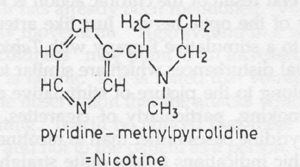
The difference between
nicotine and the tropane alkaloids is not as fundamental as it first
looks on paper. The methylpyrrolidine component of nicotine is also found in
the tropane alkaloids. There is a biogenetic connection between the two types.
This is also suggested by the fact that in some species of Duboisia hyoscyamine
is the principal alkaloid, in others scopolamine, and in Duboisia Hopwoodii
(Pituri plant) nicotine. Although Tabacum contains many minor alkaloids right
down to simple pyridine bases, the actions of the crude drug largely correspond
to those of nicotine. Nicotine is a volatile alkaloid and Tabacum probably owes
its rapid and direct action on bulbar and brain stem centers to this. Recently
a temporary antidiuretic action on the posterior part of the hypophysis via the
hypothalamo-hypophyseal system has been discovered as well. On the other hand
the peripheral action of nicotine on both the parasympathetic and sympathetic
synapses is more emphasized in experimental pharmacology. Nicotine interrupts
the transmission of impulses at these synapses and this is used to distinguish
the pre- from the post-ganglionic fibers in the autonomic nervous system. But
in this peripheral action as well as in that on the centers the paralyzing phase
is preceded by one of stimulation. Reflex actions from autonomic ganglia, such
as those on the sinus aortae and the carotid plexus, combine with those on the
respiratory, vasomotor and vomiting centers to form a very complex picture.
Added to this, the discharge of adrenaline from the adrenal glands is
stimulated. No wonder then that the actual symptoms vary greatly with the dose
given and from species to species. In the acute action on man, however, it is
the vagal excitation which dominates the first state: bradycardia, lowering of
the blood pressure, "deathly" nausea with retching and vomiting,
dizziness, salivation and increased intestinal peristalsis, then irregular cardiac activity, weakness as if
fainting, paleness with cold sweat, shaky weakness in the legs with sudden
lowering of the blood pressure; the breathing is at first deepened and quick.
If the action is prolonged the blood pressure rises which, partially at least,
must be ascribed to the increased amounts of adrenaline in circulation. In the
long run nicotine may produce atheromatosis. It was possible to demonstrate
calcareous degeneration of the aorta in animals after repeated injections of
nicotine. Another end result of the chronic action is known to be amaurosis
due to atrophy of the optic nerve. Just like arteriosclerosis this is no longer
responsive to a stimulative therapy with Tabacum. But the preceding stages,
the visual disturbances which are similar to those in some cases of migraine,
do belong to the picture of stimulative actions. The carcinogenic effects of
smoking, particularly of cigarettes, apparently must be ascribed to other
pyridine bases rather than to nicotine.
The homeopathic indications follow quite straightforwardly
from this picture of the toxicological actions. Even Rademacher's former use of
tobacco water for cholera-like conditions can be regarded as homeopathic:
symptoms of collapse with paleness, cold sweat, shaky weakness, interruption
of heart beat, and vehement diarrhea. The Tabacum diarrheas are accompanied by
meteorism and burning in the abdomen, and at the same time desire to have the
abdomen uncovered. Apart from the symptoms of collapse, deathly nausea and
vomiting, dizziness is one of the cardinal symptoms of Tabacum. This is a true
rotatory vertigo, or "objects moving up and down in front of the
eyes". I was not able to confirm the statement that the vertigo grew worse
on opening the eyes when I made some involuntary provings with heavy cigars;
on the contrary, the up and down movement only became definite on closing the
eyes, and very much so. Amelioration in open air and probably also from sour
things can be confirmed; in my own experience the condition improved by eating
an apple. This type of vertigo, nausea and general prostration, with indifference
towards life or death, is characteristic of the syndrome of seasickness, for
which Tabacum has been recommended. Cocculus, containing picrotoxin which also
stimulates the vagal center strongly, is, however, more commonly used. Rotatory
vertigo accompanied by tinnitus has also served as an indication in Meniere's
syndrome, but in that I had such good results with Chininum salicylicum that I
never tried Tabacum. It has however proved helpful in arteriosclerotic attacks
of vertigo with cerebral retching and vomiting; of course, one cannot expect
any lasting effect on the structural changes of arteriosclerosis. The same
applies to attacks of angina pectoris which are characterized by fear, with
symptoms of collapse, icy coldness and cold sweat, tachycardia and arrhythmia.
Tabacum does not have the feeling of constriction as in Cactus, the attacks
resemble more those of Latrodectus. There seems to be little clinical
experience on its use in migraines with visual disturbances. In that case a patchy
redness of the face is said to precede the paleness. And finally Tabacum has
been recommended, to my knowledge first by Emil Schlegel, as a euthanasiacum,
similar to Veratrum album, when collapse of the circulation with cold sweat and
great fear of death require a sedative.
The modalities of Tabacum are not very characteristic.
Amelioration of vertigo in the open air has already been mentioned. Vertigo and
migraine are aggravated by any movement. "Aggravation in a warm room in
spite of a feeling of inner coldness" may point to an increased desire for
oxygen when the circulation is failing. If it is stated that vomiting relieves,
this is probably based on the observation that the attacks which indicate
Tabacum often end with vomiting. It will be noticed that these modalities refer
to the acute syndromes and not to the patient as a person.
With Tabacum the action of nicotine on the autonomic centers
develops rapidly; only a short span is available for defense reactions to be
stimulated before the toxic effects set in. That is probably the reason why
Tabacum has found only limited use, and chiefly only in acute syndromes
occurring in attacks.
DULCAMARA
There remain two species of the sub-family Solaninae for us
to consider, Dulcamara and Capsicum. The Solaninae include by far the largest
number of Solanaceae and among them are the potato, Solanum tuberosum, the
tomato, Solanum lycopersicum, and the common weed Solanum nigrum.
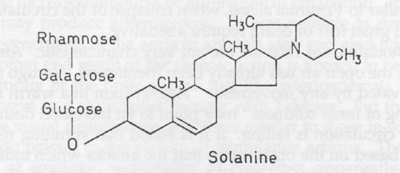
The
predominant alkaloids in the sub-family are peculiar glycosides, and solanine
may be taken as representative of the type. Several modifications of this type
occur in the Solaninae species. The aglycone of solanine is solanidine, a
fusion of a steroid structure of the cholesterol type, with a methyl piperidine
or a methyl pyrrolidine. It is quite possible that there is a biogenetic
connection with nicotine and the tropane alkaloids. The alkaloidal component is
probably responsible for the actions of solanine on medullary centers,
particularly the respiratory center. Potatoes also sometimes form excessive
solanine, most of it directly under the skin and at the germination points.
Cases of poisonings from such potatoes have been reported occasionally, with
vomiting, diarrhea and abdominal pain. 6 A number of experiments have been made
with solanine and solanidine on both animals and human beings. A detailed
discussion of the alkaloid actions involving respiration, cardiac frequency and
body temperature is not called for in this context as they have not so far
proved significant for the picture of Dulcamara or of Capsicum. A much more
definite influence from solanine has come out in a proving of Solanum nigrum
which produced some symptoms strongly reminiscent of Belladonna. But Solanum
nigrum is hardly ever used. It is interesting that the aglycone solanidine applied locally produced widening of the pupil while
solanine had no effect; furthermore, that a central motor excitation was
observed from solanine, while in the sensory sphere drowsiness, stupefaction
and dizziness and at the same time hypersensitivity to light, noise and touch
were noted.
What is new and important about solanine is that it is a
steroid alkaloid. It is thus close to the steroid alkaloids of Veratrum album
and Sabadilla. These, however, are more toxic than solanine and that is
probably due to the fact that the Veratrum alkaloids are mostly esters of
steroid alkaloids and not glycosides like the solanines. The greater toxicity
shows itself with Veratrum in the stronger action on the circulation and in the
cholera-like and collapse symptoms. The similarity between Dulcamara and
Sabadilla will be seen chiefly in the action on the mucosa. It appears that it
is not so much the alkaloid component as the steroid which is responsible for
this affinity. At this point we must take a look at the substances which are
called saponines. Many saponines are steroid glycosides, so that solanine
differs from this group solely by having the alkaloid component in addition. It
is a likely assumption that through an antagonism to cholesterol solanine,
like the actual saponines, unfolds an irritant or toxic action on the cell
surfaces. Cholesterol has an important function in the cell membranes. When a
foreign steroid alkaloid takes its place this protection may be lost to the
cell. The entering of allergens or even microorganisms is facilitated. This
would explain the allergy-like syndromes we meet with Dulcamara and Sabadilla.
Extensive painful and itching edemata have been observed also from the
handling of tomato leaves (containing the glyco-alkaloid tomatine) and from
Solarium nigrum. Besides solanine (or rather the very similar solaceine)
Dulcamara contains a mixture of saponines, called dulcamarine. As the
glyco-alkaloid content of Dulcamara has been found to vary greatly, the
saponine mixture may be more significant, perhaps in that one irritant substance
makes it easier for the other to enter through the cell membranes. The
constitutional formulas of the two constituents of dulcamarine, a glycoside
dulcamaric acid and the non-glycoside dulcamaretinic acid, are not yet known.
The saponines and solaceine are responsible for the taste of the Dulcamara herb
which is bitter at first and then sweetish. Sugar is liberated from the bitter
glycosides by the saliva. This change in taste has given the bittersweet its
name in all languages.
Here we cannot go fully into the centuries-old history of
the medicinal use of Dulcamara. It is, however, remarkable that even in old
herbals (for instance, Conker) the herb was recommended as a remedy suitable
only for persons of a cold and humid nature, and the particular effectiveness
of Dulcamara in patients who were exposed to cold and wet has been emphasized
already before Hahnemann (for instance by Carrere 7 in 1789). Hahnemann had
several times concerned himself with the action of Dulcamara before he did his
proving in 1811. One of these passages I cannot resist quoting 8 : "If, as
v. Haller (in Vicat) assures us, the bittersweet has cured cough developed from
chill, this is because in cold and damp air it has a marked tendency to produce
all sorts of catarrhs, as Carrere and de Hahn observed. The reason why just the
bittersweet has so effectively cured a type of eczema and herpes (under the
eyes of Carrere, Fouquet and Poupart) is sought in vain in the sphere of fanciful
conjectures, since simple nature herself puts it right under our noses, namely:
the bittersweet excites for itself a type of eczema; Carrere saw a herpes
spread for two weeks over the whole body from its use and on another occasion
eczema develop on the hands. Can there be a more natural connection between
potential action and effect?"
In Hahnemann's proving of Dulcamara 8, the action of
solanine (or of solaceine) on the central nervous system appears insignificant
compared with that on the skin and mucosa and on peripheral muscle and nerve.
The main actions may be summarized as of the allergy type; but that is not to
say that Dulcamara itself contains an allergen, like for instance Rhus
toxicodendron, the actions of which resemble those of Dulcamara in many
respects. It is more likely that the solanine or the saponines of Dulcamara
make it easier for any allergens to enter through the mucous membranes. Though
this is at present only a hypothesis, it is conducive to an understanding of
the actions on which we base our homeopathic use of Dulcamara.
Dulcamara's affinity to the skin, which has been known since
ancient days, has had a new light thrown upon it by the provings: at first
there is a burning and itching which is worse at night. The subsequent eruptions
a urticaria-like, 'like flea bites or nettle rash", or in the form of red
pimples and vesicles which later on may become purulent. In some
cases sudden swellings "similar to acute articular rheumatism" have
been observed (by Rockwith) in the region of the wrist, with pain along the
ulnar nerve. Moreover, severe inflammatory edemata have been seen in cattle who
had eaten Dulcamara. 9
The skin symptoms of an allergic type must be seen in
connection with the catarrhal and rheumatic symptoms. Indeed, the alternation
of syndromes, now from mucous membranes, be it of the respiratory or the
gastro-intestinal tracts, now from the skin or as "rheumatic" from
the neuro-muscular system, has become one of the main indications for Dulcamara.
The basic observation was: aggravation of skin eruptions or their reappearance
when Dulcamara had been given for rheumatism or diarrhea. This alternation of
syndromes is not of the type to qualify Dulcamara for inclusion among the
constitutional remedies in the narrower sense of the word, the so-called
anti-psoric remedies. The symptomatology of Dulcamara points rather to acute
reactions to environmental agents and influences.
The saponine-like action of Dulcamara comes out even more
clearly in the mucous membranes than it did in the skin. All secretions are
increased acutely. The catarrhs of the ocular conjunctiva, of the nose, and
upper respiratory passages are similar to those of Sabadilla, and as with the
latter have led to the use in hay fever. In the lower respiratory passages
fewer signs of increased secretion are found in the provings than one might
have expected from what animal experiments with solanine have shown. Pain in
the chest and oppression were more conspicuous in the proving of Dulcamara.
This may be due to action on centers controlling respiration which is more
evident from the reports of Dulcamara and solanine poisoning. Allergic asthma
is frequently taken as an indication for Dulcamara, but apart from the
alternation of asthma with skin eruptions and rheumatic complaints there are no
other more definite characteristics. The long-established and proved modality
that cold and wet are causal and aggravating factors in Dulcamara complaints
is accepted. But for asthma this modality applies just as well to Natrium
sulphuricum which in my experience at least has shown itself superior to
Dulcamara. Because of the aggravation from cold and wet Dulcamara has been
regarded as a remedy for v. Grauvogl's "hydrogenoid constitution",
but not too aptly; for the second characteristic of this constitutional type,
periodicity in the occurrence of symptoms, there is no evidence. With Natrium
sulphuricum this second modality is somewhat better substantiated, for there a
regular aggravation of asthma in the early hours of the morning and a
recurrence of the skin eruptions every spring are mentioned. But then the
aggravation from cold and wet in the case of Dulcamara should not be presented
simply as proneness to colds, as may equally apply to dozens of other
drugs. What is meant rather is that the catarrhal and rheumatic syndromes are
of the type which is produced particularly by cold and wet, through sudden
cooling after being heated, and suppression of sweat. Dulcamara acts "as
if" there had been a "cold".
Earaches and noises in the ears appear so frequently in the
provings that one would assume that Dulcamara should be useful for catarrhs
ascending along the Eustachian tubes to the middle ear. But there seem to be no
records of clinical experience in this condition.
Symptoms of irritation from the gastro-intestinal mucosa do
not come out very clearly in the provings, merely as pain and rumbling in the
stomach. It was known from Dulcamara poisonings already before Hahnemann that
vomiting and diarrhea may occur. Carrere had described the diarrhea as slimy
and yellow or greenish and this statement has been borne out. From clinical
observation comes the indication of Dulcamara for autumnal diarrhea, partially
also due to sudden changes of weather such as from hot days to cold nights, or
moving from the heat of the sun into chilly rooms; a variation of the
"catching cold" motif. A better indication is given if the diarrheas
appear as equivalents for other syndromes, perhaps alternating with asthma or
moist eczema.
Signs of irritation of the urinary passages and the female
genital passages with Dulcamara poisoning have been reported particularly by
Carrere: cystitis, stranguria, pain on micturition, frequency of micturition,
slimy cloudy urine; again as the result of cold and wet; symptoms of irritation
with eruptions on the external female passages with increased libido, and
menstrual disorders of various, in themselves non-characteristic, types. If in
addition there is premenstrual urticaria and if secretions or eruptions seem to
be suppressed through a chill, the case for Dulcamara would be stronger.
Hemorrhagic nephritis has been seen as a rare occurrence in Dulcamara
poisoning, but this has apparently not been taken up as an indication for the
use of Dulcamara so far. A tendency to hemorrhage may well be due to the action
of the saponines. Epistaxis has been reported several times in the provings.
Vicarious nose bleeds, in the place of missing menses or after the suppression
of other discharges, would be in line with the action of Dulcamara; but there
seems to be little clinical experience in this respect.
With regard to the neuro-muscular system which so often
manifests the effects of cold and wet, the provings have brought out many symptoms.
Apart from rheumatic-neuralgic pains, stiffness and lameness are frequent,
particularly in the back of the neck and shoulder region. Neuralgias have been
described particularly in the face, arms and calves, combined with a feeling of
icy coldness, lameness, tension, twitching and trembling. The important factor with these syndromes is the
modality amelioration from movement; it indicates stagnation in the tissues, an
altered turgidity. This modality often brings Dulcamara into the final choice with
Rhus toxicodendron which has a similar affinity to muscles, mucosa and the skin
on an allergic basis. Dulcamara is often used as a matter of routine when Rhus
Tox. has failed. The clinical indications for Dulcamara, "rheumatism
alternating with diarrhea" or "rheumatic symptoms following acute
skin eruption," need no further elucidation after what has been said
above.
Symptoms from the central nervous system which are marked in
the picture of solanine and Dulcamara poisoning are much less significant in
the drug picture. Headache and dizziness, slight twitchings and tensions,
sensations of lameness, and psychically a discontented, off-putting mood do
appear in the drug provings. But no definite therapeutic indication have arisen
from them.
The character of Dulcamara comes out most clearly in the
alternation of syndromes of the skin, mucosa, and locomotor system, and in the
following modalities: causal and aggravating factors are cold and wet, sudden
change from hot to cold; amelioration from movement applies particularly to the
rheumatic symptoms; the skin symptoms are worse at night.
CAPSICUM
Finally, there is Capsicum annuum, the fruits of which are
well known as cayenne or Spanish pepper or paprika.
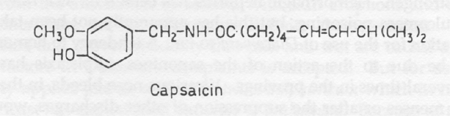
Capsicum also belongs to
the subfamily of Solaninae, but it is doubtful whether it contains the
glyco-alkaloid solanine, some say so and others not; it seems at any rate to
be of no significance for the action of Capsicum. But there are
also traces of another alkaloid which has not yet been identified; being
volatile it may be similar to confine or the tobacco alkaloids. But with regard
to the actions of Capsicum nothing definite can as yet be said about it. The
rich vitamin content of the Capsicum fruits, particularly vitamin C,
beta-ascorbic acid, may well have a bearing on its former use, in substantial
amounts, for reduced resistance to infections, marasm and dysentery, but for
the use of Capsicum potencies a vitamin substitution can hardly be considered.
The chief active principle of Capsicum is capsaicin. This is no true alkaloid,
but an acid amide, a combination of vanillyl amide with dimethylnonenylic acid.
Capsaicin is a strong irritant for the skin and mucosa. It appears to stimulate
first of all the sensory receptors, and particularly those for the sensation of
warmth. Hence the characteristic burning of Capsicum at any site where it comes
in contact with tissues. This is followed by a reflector hyperemia and this
again is characterized in that the expansion of the capillaries relaxation of
the small vessels persists for a long time. The vessels can then no longer
adapt themselves to cold stimuli, hence the general sensation of chilliness and
great sensitivity to cold. The contrast with the saponine action of Dulcamara,
where increased secretion stands in the foreground, is obvious.
As to the use of Capsicum plasters as a derivative counter
irritant for rheumatism, synovitis, chilblains and occasionally also for
bronchitis and bronchiolitis, nothing further need be said. More rarely,
Capsicum tincture is used as a gargle for torpid inflammation of the throat
with an elongated uvula. For homeopathic use the skin affinity of Capsicum has
achieved no significance.
The tincture has also been used occasionally as a stomachic
for lack of appetite and dyspepsia. Lyon
recommended it especially for alcoholism; apparently it not only relieves the
dyspeptic symptoms with morning sickness, but the craving itself is said to be
abolished. It is also maintained that Capsicum has a calming and hypnotic
action in the early stages of delirium tremens; the provings show trembling and
disturbances of sleep, but no hallucinations. Possibly the alkaloid of which no
details are known may play a part.
But it is capsaicin which is responsible for the main
actions of Capsicum. Wherever this peppery principle passes the mucosa it
produces a burning, hot sensation, and a dryness which in turn gives rise to
spasms. On elimination through the urine the bladder is irritated until there
is tenesmus, the urge to urinate is strong but ineffectual. A sharp burning
passes along the urethra and concentrates particularly on the urethral orifice;
if the irritation is continuous a state of near-paralysis arises. I have found
Capsicum particularly helpful for ectropium of the female urethral orifice
which can bring with it a distressing irritation. A good indication is chronic
urethritis, either non-specific or following gonorrhea, if there is more
irritation than secretion: a small amount of creamy secretion is discharged
with sharp burning and great urging and cramp-like erection, so-called chords.
If the bladder is involved the severe tenesmus points to Capsicum. Capsicum
seems to be less indicated for the acute initial state of an infection, and rather more when the blood vessels and
thus the mucosa are already lax from earlier attacks and a relapse of
irritation and inflammation supervenes.
Sharp burning and tenesmus indicate Capsicum also for
hemorrhoids, particularly if they occur together with the same symptoms from
the urinary passages. In such cases the symptoms of irritation are aggravated
by the passage of stools. A small amount of slimy secretion, but sometimes also
bleeding from the relaxed mucosa serve as a further indication. The
old-established indication of Capsicum for dysentery with violent tenesmus has
been give a special note by the provings: after every stool there is thirst and
if this is slaked with cold water intense shivering will follow. This latter
modality is given as a general characteristic of Capsicum: after cold drinks
shivering starts between the shoulders, runs down the back and spreads over the
whole body. That is but an example of the great sensitivity to cold: cold
draft aggravates pain, cough and other complaints, and is anxiously avoided. In
this one can see the lack of adaptability to cold on the part of the relaxed
and widened capillaries and arterioles. A particular aggravation from cold
wetness, as in the case of Dulcamara, has not been noted for Capsicum.
The irritation of the upper respiratory passages is
characterized by dryness of the mucosa. The cough arising from this is
explosive, shaking, it causes pain not only in the throat and chest but also in
more distant parts, such as bursting headaches, pressing earaches, shooting
pains into the extremities, especially along the sciatic nerve. Here again cold
aggravates, and that applies also to a dry laryngitis with hoarseness. In
general the attacks of coughing are also worse after lying down, at night, in
bed. The provings also record dyspnea, a feeling of fullness and distension in
the chest and constriction worse from movement. But Capsicum has no indications
for humid asthma like Dulcamara. On the other hand, a tendency of the dry
hyperemia of the respiratory mucosa towards ulceration can be inferred from the
following symptoms in Hahnemann's proving: "Me cough expels an
evil-smelling breath from the mouth. The breath coming from the lungs on
coughing produces a strange, repugnant taste in the mouth." In fact,
Capsicum has been used successfully in bronchitis foetida and even for lung
abscesses.
Another strange observation in the proving has led to the
frequently successful use of Capsicum for impending mastoiditis: a swelling
over the petrous bone behind the ear which is painful on touch. That was
probably only an intercellular inflammation of the type which has been seen in
one case described in the literature of lethal poisoning from Capsicum; there
the swellings appeared on the cheeks, ears and back of the neck after papular
eruptions had changed into vesicles. One can merely guess why the tympanum and the petrous bone should be sites of
preference for the action of Capsicum. The lax, spongy mucous membrane attached
directly to the periost of the mastoid and with a wide capillary bed may well
be predisposed for the irritating action of capsaicin.
The widening and relaxation of the capillaries through
Capsicum may persist and leave circumscribed areas of redness on the cheeks,
the nose or ears. The dilatation of the small blood vessels remains even under
the influence of cold, hence the red areas on the face present a contrast to
the chilliness and frostiness of the Capsicum type. Relaxation of tissues generally
is characteristic of the constitutional type. Hahnemann already noted that
Capsicum was less suitable for persons of a tense fibre. The cold, flabby type
with circumscribed redness of the cheeks has been described by later authors as
sluggish, indolent, fat--probably with some measure of poetic license. It
certainly is not a stipulation for the effectiveness of Capsicum in the
well-defined pathological conditions in which mostly low potencies are used.
Stiffness and pain in muscles and joints and along nerves
also appear frequently in the provings; they are said to be worse when starting
to move, better with continued movement, similar to Dulcamara. Capsicum has,
however, been little used in this direction.
A number of mental symptoms have also come out in the
Capsicum provings: changeable mood, peevish, sullen, timid, indifferent; also
offish and even obstinate, carping, taciturn, withdrawn; fearful and
sentimental. One prover states that such moods were not over persons or moral
issues, but over lifeless objects, having no relation to ordinary causes or
events. From this wide scale of unease towards the environment, home-sickness
has been picked out as a particular indication for Capsicum; not exactly a complaint
for which our medical aid is very often demanded. I do not know whether any
remarkable successes have been scored with Capsicum in this field. And when
some authors phrased the indication "home-sickness with red cheeks"
one really does not know whether they wanted to make a laughing stock of
themselves or of the homeopathic materia medics.
This survey of the family of Solanaceae was made to show
what the drug pictures have in common and where they differ. Without recourse
to their active substances, the closer or more distant relationships among the
remedies of this family of plants could hardly be conceived. Incomplete though
our knowledge may still be, such an approach to understanding their actions
serves an intelligent application of the drugs on the homeopathic principle.
* Reprinted by permission from The British Homeopathic Journal,
51, 1962, translated by R.E.K. Meuss.
REFERENCES
Provings of Belladonna, Atropine, Stramomium, Dulcamara, and
Capsicum--T.F. Allen, Encyclopedia of Pure Materia Medico.
Provings of Solanine--Schroff, Pharmakologie, p. 632, and
Clarus, Journ, f. Pharmak., I, p.245
1 Leeser, O., D.Z.f. Hom. 1925, p. 134.
2 Baker and Farley, B.M.J., 1958,
P. 1390.
3 Leeser, O., D.Z.f. Hom. 1925, p. 139.
4 Van Vleuten, Zentralbl. f. Nervenheilk. u. Psychiatr., 15,
19, 1904.
5 Mezger, J., Arch. f. Hom., I, p. 41, 1953.
6 Wilson,
G.S., Monthl. Bull. Min. Health Lab. Serv., 18,207,1959.
7 Carrere, Traitede la Douce-amere, 1789.
8 Hahnemann, S., Hufelands Arch., 26, 2,p. 26.
9 Barrat, Journ. de Med. Veterin., 72, 9, p. 545, 1926.