When taking up the theme
of the actions and the use of snake-venoms we pay tribute to that remarkable
personality Constantin Hering (1800-1880) who, while in Surinam (1827-1833),
collected, prepared and tested the venom of the "bushmaster" Lachesis
muta (then called Trigonocephalus lachesis). After founding, together with
Wesselhoeft, the North American Academy of Homeopathic Medicine in Allentown,
PA (1835), he published all the data available at that time on Lachesis,
Crotalus horridus, Vipera berus (then called V. torva), Vipera Redii and Naja
tripudians (Naja naja) in a booklet (1). Though 120 years of extensive use
chiefly of Lachesis and Crotalus have passed, Hering's work is still a main
source of our knowledge and use of these venoms. His was the first scientific
approach to a subject which has roused the imagination of men from times
immemorial.
There is no need here to
pursue the many myths on serpents from the days of Adam and Eve through the
ages. Not all of them are concerned with venomous snakes, witness the classical
statue of Laocoon and his two sons strangled by huge serpents. The more
primitive ophidians like the Boidae (e.g., Boa constrictor) use sheer muscular
force against their victims. The venomous snakes on which pharmacological interest
concentrates are more highly specialized, and significantly so in those
morphological and biochemical features which have survival value, viz. feeding
on sizeable animals (rodents or even other snakes), and defending themselves
against enemies. In view of the but modern medicinal use of snake venoms it is a
strange fact that, since Asclepios' times, they have signified the two aspects
of the pharmacon as potential poisons or remedies. The snake winding itself
around the caduceus and pouring its poison into a recipient vessel has become
the symbol for the power of the physician: inimical forces are tamed to heal.
Among the approximately
400 species considered to be venomous, only a few have so far qualified for the
inclusion in our materia medica: chiefly Lachesis muta, Crotalus horridus and
Naja tripudians (Naja naja). Other species of Crotalus (the Central American
Cr. durissus terrificus and the South American Cr. terrificus terrificus under
the name of Cr. cascavella), Bothrops lanceolatus (B. atrox), three species of
the genus Vipera W. berus, V. redii and V. Russellii), Agkistrodon mokeson
under the name of Cenchris contortrix, and lastly Elaps corallinus are still of
minor importance. These few represent the most poisonous families fairly well.
Though there is no
complete conformity with regard to the zoological classification and
nomenclature, it is significant that the development of the poison-apparatus
has been adopted as a morphological criterion for broad classification, and
especially so the development of the formation of teeth or fangs. Those snakes
which cannot inoculate venom into their victim by their bite do not come within
our scope; they are the Aglyphodonta which have no grooved teeth and the
Opistoglyphodonta which possess grooved teeth in the posterior mouth serving as
grinders. The two families which concern us as venomous in the stricter sense
are the Proteroglyphodonta with two small grooved fangs firmly implanted in the
front of the maxilla, comprising the land-snake family of Elapidae (Naja trip.
and Elaps corral.) and the Solenoglyphodonta with the families Crotalidae
(genera Crotalus, Agkistrodon, Bothrops, Lachesis) and Viperidae (genus
Vipera). The Solenoglyphodonta are the most highly specialized, their two fangs
are large, slightly curved and hollow, they inject the poisonous secretion of
their supralabial salivary glands, as it were, through a hypodermic needle. In
this they are aided by the mobility of the fangs and the jaws, and the
synchronized action of several muscles which instantaneously evacuate the
salivary glands through the ducts and the tubes of the fangs.
There is no doubt that the
counterpart of the morphological evolution is also found on the biochemical
level, in the composition of the venoms of the different families and species.
The general statement that the venoms of the Elapidae are more neurotoxic,
while those of the Crotalidae and Viperidae interfere more strongly with the blood
cells and the blood coagulation, is to be considered only as a first
approximation. In spite of intense research into the chemical nature of venoms,
only some glimpses have as yet been obtained. This is not surprising in view of
the fact that dry snake venoms have been found to consist of up to 92 percent
of protein. The protein — or at least polypeptide — nature of the active
principles is confirmed by a mass of immunological phenomena; they can act as
antigens, i.e., they are able to form antibodies when directly injected into
the circulating body-fluids of an unrelated species. The immunizing sera thus
obtained show a high degree of specificity against that particular venom. From
numerous cross-experiments in this field two deductions can be safely made.
Firstly, venoms of closely related snakes have similar antigenic composition
and, since the antigenic proteins are the active principles, the toxic
effects, too, are similar. To some extent such cross-reactions appear even to
transcend the class of reptiles altogether, as partial immunization by snake
anti-venins against scorpion venoms has been observed. This would indicate that
so widely distant types of animals have some active principles of proteinaceous
nature in common. A second conclusion to be drawn from pertinent experiments is
that each venom is a complex of a number of active
principles of antigenic character. At least ten antigens are attributed to the
venom of Naja naja (tripudians), the spectacled cobra of India. Between
two species of vipers (Viper Russellii and Echis, the saw-scaled viper) at
least five cross-reacting antigens have been found. This is, however, not to
say that the different antigenic properties are due to so many separate
protein-molecules, but rather to distinct active groups on the agglomerate
macromolecules. At the present stage of knowledge the various names of these
active principles denote merely the kind of effect they have on parts of
another organism.
Any foreign protein which
gets into the blood-lymph stream by eluding degradation through digestive
enzymes constitutes a "poison" and the organism will protect itself
against it by a very specific reaction of its globulins, i.e., by the formation
of antibodies. In the course of this adaptive process anaphylactic and
allergic phenomena are known to occur under certain circumstances. The
antigen-antibody reactions represent, in a way, only the spearhead of defensive
activities. When in allergic conditions they produce symptoms, these are in
the main stereotyped in that they indicate either spasms of involuntary muscles
or changes in the permeability of the vessels. According to present theories
they are due to the liberation of histamine-like substances from certain cells
in the course of the immune-reaction. From our point of view, such syndromes
lack distinctiveness, they do not suffice to distinguish the actions of one
agent from those of another. For that purpose they have to be supplemented by
methodical provings. On the other hand, such allergic syndromes demonstrate
the action of such an "allergens" to be a systemic one. Thus Hering
was quite right when he incorporated the symptoms which appeared while he was
triturating the venom of Lachesis, into the list of its symptoms. Recently,
Stanic (2) has described the allergenic properties of the venom of Vipera
ammodytes. When scraping the dry venom from petri dishes he became sensitized
by the dust, so that he was seized by sneezing, profuse nasal discharge lasting
for hours, and attacks of coughing. He tried to desensitize himself by
injecting 0.00001 g. subcut. into the forearm. The dose proved far too strong,
since several minutes later urticaria, retrosternal pain and dyspnea appeared;
then, through swelling of the tongue, speech became difficult, and finally a
heavy asthmatic coughing attack occurred; the forearm gradually got swollen up
to the fingers. After a dose of 1:1000000 the reaction was milder and after
another one of the same strength very mild. Ten days later he experienced only
moderate sneezing from the dust, and coughing with retrosternal oppression.
Eight months later all the previous symptoms returned! In order to desensitize
himself, he injected 0.000004 g. intradermally and had the same reactions as on
the first occasion, but to a somewhat milder degree. Another chemist
suffered for months from asthma owing to the dust of the venom in the
laboratory, so that he could no longer work in the place.
By such experiences the
outworn objection that snake venoms, when given orally, are ineffective stands
refuted. To be sure, after 130 years of using the potentized venoms in
Homeopathy, there is hardly any need for such corroboration. It is true that
the venoms in their concentrated state do not pass the intact mucosa and if
disintegrated by digestive enzymes become harmless. But when dispersed as
minute particles, and the more thoroughly dispersed the better, they enter the
lymph-spaces and produce symptoms. To those engaged in the study of enzymes it
is familiar that these proteins develop their specific effects only if
sufficiently dispersed. The oral administration of potentized venoms would thus
appear to be equivalent to the injection of a highly dispersed solution.
Although for the snake it is natural to inject its venom into its prey or enemies
through the fangs, it is not particularly biological to inject potencies, nor
is it necessary. Only when massive doses are used on general diagnoses, such as
epilepsy or carcinoma, does parenteral administration seem justified. The use
of snake venoms in these types of disease had had its vogue, but nowadays one
hears little of it. More recently Sanders, Akin, and Soret (3) have used
neurotoxoids (prepared with hydrogen peroxide as detoxifying agent) of Naja and
Crotalus species for checking experimental poliomyelitis in rhesus monkeys. The
common affinity of virus and venom for the central nervous system appears to
have suggested these experiments. It is of interest to note that only when
small amounts of toxoid were used, as late as the fifth day after the
intracerebral injection of virus, interference with the infection could be
achieved.
As constituents of the
saliva of the snakes, the venoms have the function of initiating and
facilitating the digestion of animal tissues. The proteins of the venoms must
therefore, at least partly, be classified as digestive enzymes, and very
powerful enzymes at that. For the snakes devour their victims entire, without
troubling to break them up first. No wonder that these strong enzymes are
highly toxic for the victims. The horrifying consequences of snake bites have,
indeed at all times made a profound impression on men.
If certain proteins of the
venoms are distinguished by the epithet "toxin," such as neurotoxin
and cardiotoxin, this does not mean that their action is not enzymatic. They
may not be digestive enzymes, since their primary function could be to paralyze
or kill the prey; but their rapid and strong effects are considered to be due
to their interference with vital enzyme-systems of the animal's organism, the
proteinaceous "toxins" acting as anti-enzymes. After all, the names
are merely provisional, as long as the structural
configuration of the agent is unknown; they indicate no more than the main
direction of the actions (e.g., neuro-, cardio-, haemo-) of isolated fractions
of the whole biological complex of the venom. The names of enzymes, however,
acquire a fuller meaning the more precisely their mode of action is understood.
With the progress of
biochemical research such terms as proteolysins, cytolysis (including
hemolysins and neurocytolysins), coagulins and anticoagulins are replaced by
terms denoting the particular enzymes which catalyze the pertinent actions. So
far the following enzymes have been recognized in snake venoms: proteinases,
which decompose proteins, a 5- nucleotidase which specifically dephosphorylates
adenosin-5-phosphate and a l-aminoacid-oxidase; phospholipase A which splits
off an unsaturated fatty acid from lecithin and cephalin; hyaluronidase which
hydrolyzes the polysaccharide hyaluronic acid; and acetylcholinesterase which
hydrolyzes acetylcholine into choline and acetic acid. Of these, the l-aminoacid-oxidase need not be considered here, because no toxic effects are
known of this enzyme, nor are they to be expected. Its action seems to be
correlated to riboflavin which appears to be present in many snake venoms and
to be responsible for their yellow color (4). The 5-nucleotidase may well be
responsible for the powerful inhibition of cell-respiration seen from snake
venoms, through decomposing the enzyme-apparatus (mitochondria!) of the cells;
but nothing definite is known. The acetyl-cholinesterase may play a part,
though probably not a decisive one, in the action of some venoms on the
neuro-muscular system; it is in this respect suggestive that the enzyme has
been found only in venoms of the neurotoxic Elapidae and not in those of the
Viperidae.
More than one proteinase
is assumed in snake venoms. The principal one appears to be similar to trypsin,
but is not identical with it. The decomposition of proteins by these powerful
enzymes is apparently the first step in the poisoning process of snake bites.
The signs and symptoms at the site of the bite--pain, swelling, blood
extravasation and necrosis--are due to this parenteral digestion. Not all the
snake venoms cause this local inflammation and necrosis, the Crotalidae and
Viperidae more so than the Elapidae (though the bite of Naja causes some pain
and swelling). Further the proteinases interfere with the globulins and the
fibrinogen of the plasma. From the globulins a hypotensive substance,
bradykinin, appears to be set free. The extreme prostration with cold
perspiration soon after the bite of Lachesis and Crotalus horridus may be
attributed to the sudden lowering of the blood pressure. The action of
proteinases on fibrinogen manifests itself in the final stage of blood coagulation,
the transformation of fibrinogen into fibrin. This process is generally
recognized as proteolytic. Like thrombin, the proteinases of snake venoms
activate fibrinogen by splitting off a part of
the molecule and, in the presence of calcium ions, a rapid polymerization to
fibrin then takes place. The structure of the fibrin clot seems, however, not
the same as that from thrombin. Most, but not all, of the venoms of Crotalidae
and Viperidae promote blood clotting. In some instances the venom proteinase appears
to act so rapidly on the fibrinogen that it is decomposed and cannot form a
fibrin clot. The venom is then an anti-coagulant. Furthermore, these venoms
interfere also with the preceding stage of blood coagulation, the formation of
prothrombin and its conversion to thrombin. This action is, however, probably
due mainly to another enzyme of the venoms, viz. the phospholipase A. This will
be discussed later. From the quantitative point of view, experimental results
with the venom of Vipera aspis are of interest (5). The addition of 1:1000 to
1:5000 concentrations of venom shortened the time of coagulation of recalcified
plasma. With concentrations between 1:10000 and 1:50000 the time of coagulation
dropped to a minimum level. Further dilutions of the same venom resulted in a
new increase of the coagulation time, finally reaching a plateau value which
corresponded to the coagulation time observed in the absence of venom. There
was thus an optimal effect as to acceleration of plasma-clotting in the range of
10 -5, 10 -6.
The hyaluronidase enzymes
found in snake venoms, as in venomous secretions and tissue extracts of many
other animals, are not particularly toxic by themselves, but they facilitate
the penetration of other toxic substances into the system. They are what used
to be called the "spreading factor". By splitting the
mucopolysaccharide hyaluronic acid (similar to heparin and chondroitin-sulfuric
acid) apparently a normal tissue-protection is removed. The hyaluronidases are
antigenic. As the anti-viper sera do not neutralize the spreading effect of the
venom of Elapidae, the hyaluronidases of those two series appear to be
different.
Phospholipase seems to be
the enzyme in snake venoms which has the most deleterious systemic effect. It
was first called lecithinase A because it splits a fatty acid off lecithin A,
but as it does the same with another phospholipid, cephalin, the name
phospholipase A is now preferred. For a better understanding of its action, the
formulae of lecithin and cephalin may be recalled:
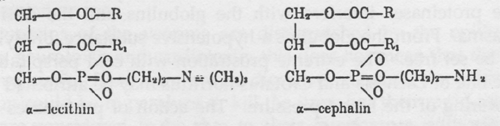
It will be seen that
lecithin is glycerol of which 2 OH-groups are esterified by fatty acids (the
second one being unsaturated). The third OH-group is esterified with phosphoric
acid and this in turn with choline. Cephalin differs from
lecithin only by having colamine in the place of choline. Phospholipase A does
not catalyze other phospholipids, but only the two derived from glycerol,
lecithin and cephalin. It splits off the unsaturated fatty acid and thereby
produces lysolecithin and lysocephalin respectively. It is conceivable that the
selective permeability of cell membranes will be thoroughly altered by this. Indeed,
the lysophosphatides produced by the enzyme have a strong lytic effect not
only on the red blood corpuscles, but also on other cells. The terms of
hemolysin and cytolysis can, at the present stage of knowledge and in respect
of snake venoms, be replaced by phospholipase A. The enzyme shows antigenic
properties and is inhibited by snake venom sera.
Not only erythrocytes but
also leukocytes are broken up by phospholipases, and leukopenia and even
agranulocytosis may ensue. The phospholipid content of leukocytes on the whole
runs parallel to their phagocytic activities. This makes such features of the
effects of Crotalidae venoms, especially of Lachesis and Crotalus, as the lack
of "pus bonum" and the poor healing tendency of necrotic-hemorrhagic
ulcers more easily understood.
Since the cephalin
constituent of the blood platelets appears to be the carrier of the enzyme
thrombokinase which activates prothrombin to form thrombin, the phospholipases
may also interfere with this first stage of blood coagulation. Destruction of
thrombokinase would lead to retarded coagulation and a tendency to bleeding,
features well-known in the syndrome, especially of Crotalus horridus. The
phospholipase content of the venom of Crotalus terrificus terrificus
(Cascavella) has been found to be very high (6). In Bothrops species, on the
other hand, the phospholipase content was low, their venom is strongly
coagulant. This action is generally attributed to proteolytic enzymes, not
only on fibrinogen, as mentioned above, but also on prothrombin. According to
H. Eagle (7), the Bothrops venoms in extremely low concentrations, convert
prothrombin to thrombin and thus set going the coagulation mechanism. The
varying proportions of proteinases (acting on fibrinogen and/or on prothrombin)
and phospholipases obviously have a profound influence on the syndromes of the
different species, especially of Crotalidae and Viperadae. In the Elapidae
interference with blood coagulation is much less prominent.
It should be mentioned
that lately a useful test for snake (and bee's) venoms has been developed from
the action of their phospholipases on egg yolk emulsions, the heat
coagulability of which is inhibited. The retardation of the coagulation is
measured.
The phospholipases
(probably in collaboration with the 5-nucleotidase, as mentioned above,
inactivate further physiological enzymes in the tricarbon (or "citric
acid") cycle of intermediary cell metabolism, thus interfering with end-oxidation.
Particularly the succinodehydrase is known to be inhibited. Such inhibition of
dehydrases has been seen from concentrations of snake venom of 1:50 billion
(i.e. 10 -13 to 10 -14), while with a concentration of 1:1 million (10-6)
inhibition was complete. Crystallized lecithinase A has been allowed to act on
mitochondria of liver cells which are known to have a high turnover in
phospholipids, and inhibition of the oxidation of succinic acid was then seen.
The dehydrases of the so-called cyclophorase system are attached to the
mitochondria; the lecithin probably binds the enzymes to the mitochondria. In
view of the discussion to follow, it may be recalled that succinodehydrase has
a thiol-(SH-) group on which its enzymatic activity apparently depends.
Of special import are the
phospholipases for the action of venoms on the nerve system, the neuraxis as
well as the medullary sheaths of the peripheral nerves. There the cephalins are
known to prevail over the lecithins. When peripheral nerves degenerate, the
cephalins are the first to decompose. The neurotoxic principles of snake venoms
have generally been termed neurotoxins, but may now be described more precisely
as phospholipases, especially cephalinases, decomposing cephalins to
lysocephalins. Since Slotta and Fraenkel-Conrat (8) obtained from the venom of
Crotalus terrificus terrificus a uniform protein in quadratic, thin, tabular
crystals, which they called "crotoxin," it seems established that the
neurotoxic activity, too, is due to phospholipases. The neurotoxic and the (in
Crotalus venoms prevailing) hemotoxic actions were found to have the same
proportions in the crystalline "crotoxin" as in the crude venom. The
fact that crotoxin was free of coagulating principles appears significant. The
proportion to which proteolytic enzymes are present in a particular venom may
well have a bearing on whether the hemotoxic or the neurotoxic actions of the
proteinic enzyme phospholipase predominate; but other directive conditions, as
yet unknown, also may play their part. In the Naja naja (tripudians) venom,
long recognized as chiefly neurotoxic, Slotta and Fraenkel-Conrat (9)
significantly found practically no coagulant nor proteolytic action.
Surprisingly, Slotta and
Fraenkel-Conrat did not find in their crotoxin any zinc which, since 1919, has
repeatedly been ascertained in snake venoms and was thought to be a constituent
of the neurotoxic principle. In view of the affinity of zincum to the nerve
system, the presence of this co-catalyst might have presented a clue to the
neurotoxic action of the enzyme. It has to be seen whether the more neurotoxic
venoms of Naja and the Elapidae generally contain zincum. They were reputed to
be particularly rich in the metal.
There is general agreement
on the cardinal role which sulfur has in the venom actions, and as a constituent
of active atom groupings of the neurotoxic principle in
particular. About the configuration of this active group, however, Slotta et al
(9) and Micheel et al (10) held opposite opinions twenty years ago, and up to
now the question appears to have remained unsolved. Slotta asserted that all the
sulphur of his "crotoxin" as well as of the Naja neurotoxin was
present as a cystin-like S-S-bridge, while Micheel interpreted his own tests
with Naja venom as showing that the sulfur could not be present in the
cystin-like S-S-form, nor a thiolactone or a thiazolidine grouping, both of
which had been considered possible. Micheel did not, however, give an
alternative solution. In the absence of a better working hypothesis, the
present author ventures the following which is amenable to tests: the action group
may be a structural analogue of either ax-lipocaic acid (a cyclic disulphide of
a low fatty acid, thus containing the S-S- bond) or of the thiazol grouping of
thiamine (vitamin B1). Both these compounds are essentially active in the
enzymatic process which reduces pyruvate to acetate (by oxidative
decarboxylation). Inhibition of this process would then produce syndromes
similar to B1-hypovitaminosis or even avitaminosis (Beri-beri). That is to say,
the neurotoxic and the cardiotoxic actions of venoms could be traced to the
same faulty metabolic process. Furthermore, as a diminished difference in the
oxygen contents of arterial and venous blood is a characteristic sign of
B1-hypovitaminosis, the familiar "venosity" of Lachesis and other
snake venoms could be better understood. In Beri-beri the right auricle and
ventricle are known to suffer more than the left ones.
Sarkar (11) has separated
an active principle from Naja naja venom which has an affinity to muscle and
particularly that of the heart; he has called it "cardiotoxin."
Injected intravenously into cats this "cardiotoxin" caused a sharp
fall in blood pressure. Anima, Devi and Sarkar (12) observed an increased
systole and diastole of the heart when it was per-fused with a solution of Naja
venom of a concentration 1:50000 to 1:10000, while with a concentration of
1:400 to 1:300 the heart went into final systolic contracture. In view of
the — to us — familiar cardiac syndrome of Naja these finds are noteworthy. The
relation of this fraction to the other toxic proteins, though, remains to be
clarified.
From the venom of the
South Brazilian Crotalus terrificus terrificus another protein has been
separated and, on account of its basic properties, has been called
"crotamine." Other Crotalus species do not appear to contain
crotamine. If that should be confirmed, one would have to make a greater
distinction between Crot. horridus and Crot. cascavella than is usually done.
The characteristic effect of crotamine is said to be a paralysis of the
posterior extremities in mice. As the crotamine has been separated from
crotoxin by electrophoresis, it may well be that, in the natural protein
complex, the two neurotropic polypeptides are combined.
By and large, these are
the relevant facts so far revealed by biochemical analysis of the various
venoms. Obviously the relative amounts of the different enzymes in the complex
venom of each species will determine the trend of the toxic effects. Though by
their nature the snake venoms manifest certain common features when acting on
the human organism, contrasts between families are evident, as between Elapidae
on the one hand and Crotalidae and Viperidae on the other. With species of the
Elapidae, neuro-muscular and cardiac affinities predominate, and the
inflammatory, necrotic, hemorrhagic and coagulant signs are practically absent,
while with the Crotalidae the latter are pronounced and even more so with the
Viperidae. Nor must the time factor in the development of the syndromes be
overlooked. Though Naja, for instance, may have hemolytic actions, they are
overtaken by those on nerve centers and the heart. Closer examination reveals
toxicological differences between genera of the same family and even between
species of the same genus. At this point the need for distinctive symptoms and
modalities arises, as they are ascertained by systematic provings and then
sifted, confirmed and emphasized by experience. These pointers to the
"simile" in an individual case have to be elaborated as specifically
as possible, they should permit discrimination not only between drugs from
different species of snakes, but also from others that may have more or less
features in common with snake venoms. For the symptomatology of a patient does
not generally lead to the conclusion that the appropriate remedy has to be
found among the snake venoms, but the last choice may be, for instance, between
Lachesis and Arsenicum album or between Naja and Spigelia.
LACHESIS MUTA
It is fortunate that
Hering gave his searching mind first and foremost to the venom of the much
dreaded "bushmaster" of the South American and Central American
tropics. This very aggressive monster excels among the highly specialized
family of the rotalidae by its length (up to 3.60 m.) and its large fangs. To
judge from the mostly fatal consequences of its bite, Lachesis possesses a full
range of strong enzymes; the proteolytic, cytolytic and coagulant ones appear,
however, to preponderate over the neurotoxins. The sudden stabbing pain at the
site of the bite may extend from the limb to the trunk and become intense, even
intolerable, the bitten region becomes edematous and discolored from
ecchymoses, and may be covered with blisters; necrosis and even gangrene may
set in. A dark oozing hemorrhage is often striking. The lack of purulent
discharge shows the low level of defensive reactions in the tissues. The venom
spreads so rapidly that general symptoms appear almost immediately. Extreme prostration, cold
perspiration, a quickened, weak pulse, dyspnea, nausea, vomiting and sometimes
diarrhea lead to repeated collapse and eventually death.
Such a rapid sequence of
events after the bit of Lachesis can manifest only the general trends of the
toxic action. The organism has little opportunity to develop its defensive
reactivity, the lesions are irreversible. In order to obtain detailed
distinctive symptoms, the more transient reactions elicited by suitable
preparations and doses of the venom have to be detected and integrated into the
picture of drug actions. The gross toxicological effects serve, however, as
firm outlines of the picture into which the subtler details have to be fitted.
Such a synopsis must depend on present-day physiological knowledge and to some
extent the interpretation will be provisional.
Even the gross signs near
the point of entry of the venom supply valuable clues for Lachesis. Wounds and
ulcers are characterized by poor healing tendency, no proper suppuration
develops, the damaged tissues are not well demarcated, and the margins are
discolored, blue-red. In a Lachesis case the inflamed regions of skin or mucosa
are often dark blue or purple and somewhat swollen by edema. Thin fetid
discharges indicate the necrotic and even gangrenous tendency. Ulcers are
sensitive to touch; the often considerable pains are relieved by warmth. (The
frequently asserted aggravation of all Lachesis symptoms by warmth is not
supported in this and other respects, neither by provings nor by clinical
experience.) The more severe cases of varicose ulcers do not seldom show these
features and, considering the strong tendency of Lachesis for thrombosis, it is
not surprising to find the choice of Lachesis vindicated by such gross local
signs and symptoms alone. The same may apply in cases of thrombophlebitis,
though Crotalus may prove superior there.
The mucous membranes of
the throat, and in particular the tonsils, are a favorite site for necrotic
inflammation which exhibits the characteristics of Lachesis. The dark blue-red
discoloration, the offensive breath distinguish Lachesis well from Apis with
its pale red acute edema. Sensations of constriction, difficulties in
swallowing and a feeling of suffocation are only what one would expect in such
a case; common to several snake venoms also in non-infectious conditions, they
appear accentuated with Lachesis. The high sensitivity to superficial touch,
but not so much to pressure, is a characteristic of Lachesis and may lie behind
the symptom: swallowing of liquids is more difficult than of solids.
The malignant,
"septic" character of infectious Lachesis cases is underlined by a
number of signs and symptoms which are not so much derived from provings as
from clinical cases cured by Lachesis. The tongue is dry and a shiny red,
cracked at the tip, in more severe cases black at the center and red at the tip,
swollen, "heavy" and stiff. It is protruded only with difficulty,
remains attached to the teeth and trembles. The fever is of the adynamic type.
The discharges are offensive, the stools in particular are fetid. Skin and
sclerae may take on a yellowish tint, but this has to be attributed to
increased destruction of the red blood cells rather than to disorders of the
liver. It is also due to the hemolytic component if hemorrhages are dark, fluid
and do not coagulate easily. On the skin blood extravasations may occur in the
form of ecchymoses, purpura or petechiae. In the low fevers of Lachesis cold
shivers alternate with spells of dry heat; skin and mouth are dry; when
sweating does occur, it is felt to be a great relief. This relief from the onset
of secretions and discharges, especially from the onset of the menses, has
clinically proved to be a valuable modality, though Lachesis shares it with
several other remedies.
In the broad field of
cardiovascular disturbances, with their repercussions on respiration and on
the sensorium, it appears futile to trace one part to peripheral, another to
central origins. For they are interlocked in one functional cycle. What we call
"venosity" in the syndrome of Lachesis, as indeed of several other
remedies, may be partly due to damaged red blood cells, to a relaxation of the
veins from lesions of the intima, venous stasis and thrombotic occurrences,
partly to impaired metabolic functions with incomplete end-oxidation, partly to
the involvement of the right auricle and ventricle; but either indirectly or
primarily the autonomous nerve centers, cardiovascular, respiratory,
parasympathetic and sympathetic, will be implicated. That is why we may
frequently find muscular spasms and sensations of constriction associated with
the vasomotor disorders of Lachesis. It should be recalled that the snake
venoms tend to lower the blood pressure. A tendency to faint from sudden
change of position, pallor of the face, some nausea and precordial pain point
in this direction. These is also a hypotensive kind of dizziness with a pale
face alleged to be worse after walking in open air, which contrasts with the
modality more frequently encountered in Lachesis cases, especially with the
congestive headaches of the climacteric: relief in the open air. Again this
modality is shared by other remedies favored in climacteric troubles, e.g.,
Pulsatilla and Sepia. The congestive headaches, often in the form of heat and
pulsating on the crown of the head, are aggravated in the sun, similarly as
with Glonoin from which the case for Lachesis then has to be distinguished by
other symptoms and modalities. Alternating shivers and heat flushes are
frequent vasomotor symptoms of Lachesis without connection with feverish
states; another indication for its use in the climacteric. Palpitations and
pulsations, a restless anxiety, oppression around the heart, a feeling of
constriction in the throat and even suffocation may further mark the spells due
to vasomotor imbalance.
The changes from the waking
to the sleeping state and from sleep to wakening tend to bring about a marked
aggravation of Lachesis symptoms, very likely via the autonomic centers of the
midbrain. On falling asleep, breathing stops and this causes a sudden start
with feeling of suffocation; or an oppression in the precordial region with a
fast, weak and arrhythmic pulse may hinder the smooth transition into sleep.
The peculiar constriction in the throat, the feeling of a tight collar around
the throat, too, may come in. Even more marked is the aggravation of most
symptoms on awakening from sleep; "the patient sleeps into
aggravation" is the usual term for this modality of Lachesis. The same
modality is, however, found not only with the venoms of other snakes, but also
with those of other animals, such as Apis and Bufo. In some cases the starts
when falling asleep (even more characteristic for Digitalis than Lachesis) may
be early signs of insufficiency from anoxemia or even structural lesions of
the heart muscle. (In true angina pectoris Latrodectus mactans has proved
superior, when the icy coldness of the extremities during the attacks indicated
the spider venom.)
The heightened
surface-sensitivity to touch and the spasmodic tendencies, already alluded to
above, are of general significance in the Lachesis syndrome. They manifest the
lowered threshold in the sensory motor reflex mechanism. The region of the
throat and larynx appear to be peculiarly sensitive and prone to respond with
sensations of constriction. (The snake does not seem to suffer from it when it
swallows a rabbit entire!) The feeling of constriction is also noted in the
stomach region and around the abdomen which may be distended from portal
stagnation. In the lower abdomen the sensation is supposed to occur frequently in
connection with inflammations and cysts of the ovary, with preference to the
left one. The latter detail, though derived merely from clinical observations,
has proved useful for discriminating against Apis which appears to affect
rather the right ovary. It would be futile to look for an explanation. The
assertion that the throat syndrome of Lachesis is left-sided or starts on the
left and goes to the right, cannot be supported in the experience of the
author. To some extent the predilection for the left side is accounted for by
the heart symptoms of Lachesis. Judging from the provings, the left-sided
symptoms surpass the right-sided ones chiefly in the neuromuscular sphere.
Paretic conditions, numbness and other parasthesias are recorded almost exclusively
for the left side. Thus on the whole the old assertion that Lachesis is one of
the left-sided remedies can be upheld.
The sensitivity io touch
may go to such extremes that even the contact of tight clothes and that of the
bed-clothes on the abdomen is ill tolerated and avoided. Though pressure is
generally not so unpleasant as slight touch, a tight collar or waist-band are
aggravating. In the motor sphere, symptoms such as tremulous weakness and a
certain lameness of the left side are not particularly
characteristic. If in paralyses from apoplectic insults Lachesis be called for,
it is on the strength of peculiar symptoms and modalities. The use of Lachesis
in epileptic conditions seems, however, to have been unduly neglected of late.
In the early days already Hering and Gross reported good results in clear cases
of epilepsy, and the present writer remembers having seen benefit from Lachesis
in a few cases, especially of "petit mal". Indeed, a number of the
symptoms of Lachesis point strongly in this direction. The fits of vertigo show
epileptoid traits: viz. staggering, threatening to fall to the floor and as if
to lose consciousness; marked failure of memory, does not remember what he has
been told just before, loses the connection in speaking, makes mistakes in
writing, sense of time is deranged. It is not surprising that the
indiscriminate use of snake venoms merely on the diagnostic indication
"epilepsy" has been abandoned, but there are good grounds for a
selective use of Lachesis in individual cases. It is in these cerebral
disorders that the often repeated, but scarcely verified modality
"complaints recur in spring" may find some justification; it might be
related to the better substantiated modality, mainly for congestive symptoms of
the head, "aggravation from exposure to sun". A similar recurrence
and increase of fits is known in the brain-injured, and there, too, the first
piercing rays of the sun may be held responsible for the aggravation.
Finally, the actions of
Lachesis on men culminate in a wealth of diverse psychic symptoms. They are
well brought out by Hering in the booklet mentioned above. In his annotations
he even expresses some surprisingly modern views on the emotional determination
of psychic disorders. The two main constitutional trends, the cyclothymic and
the schizothymic, are well represented in the symptomatology of Lachesis. A
submanic state was experienced by Hering himself while triturating the venom.
The mental activities, particularly the imagination, were stirred up to a kind
of ecstasy. Loquacity, a good characteristic of Lachesis, goes to the brink of
incoherence and "flight of ideas". The contrasting depressive phase
of sadness, anxiety, and fears is also brought out, but apart from the general
modality that it is worse after sleep and in the morning, it has no distinctive
features. In the schizothymic sphere, two phases are also apparent: an
emotional indifference and a paranoid state. The symptoms of the latter,
suspicion, jealousy and a certain supercilious and quarrelsome behavior, have
proved the more characteristic and useful clues to Lachesis. It is said that
grief, disappointment and mental anguish are at the root of the psychic
symptoms of Lachesis, but that is too common to be of distinctive value. If the
psychic abnormalities develop in the climacteric, it is one more reason to
consider Lachesis as the remedy.
To sum up:
LACHESIS MUTA
(Reptilia; Ophidia;
Solenoglyphodonta; Crotalidae)
1. ACTION ON BLOOD PLASMA,
BLOOD CORPUSCLES, CAPILLARIES, VEINS
Inflammations and ulcers on skin or mucosa
discolored dark blue and purple; wounds and ulcers with blue-red margins.
Impaired reactivity and
demarcation (Leukopenia and agranulocytosis).
Affected parts highly
sensitive to touch.
Thrombosis, embolism,
thrombophlebitis.
Necrotic-gangrenous
tendency.
Blood disintegrates
easily, is fluid, dark, does not coagulate properly.
Yellowish skin and
sclerae, hematogenic icterus.
Ecchymoses, purpura,
petechiae.
In infectious conditions:
adynamic fever, tongue dry, shiny red, trembling, protruded only with
difficulty; dry skin, perspiration relieving.
Secretions offensive;
decomposed, fetid stools.
Anoxemia of parts and
venous stasis, "venosity".
Better from onset of
discharges and hemorrhages, e.g., menses.
2. CARDIOVASCULAR AND
VASOMOTOR EFFECTS
Hypotension, dizziness
with pale face, tendency to faint.
Congestive headaches,
relieved in open air, aggravated in the sun, cold extremities with head hot,
cold shivers alternate with flushes of heat (climacteric!). Palpitations with
anxiety and oppression.
Heat, pulsating, pressure
especially on top of head, worse from sun. Spasmodic oppression in precordial
region, pulse fast, weak, sometimes irregular.
On going to sleep,
breathing stops, sudden start, with feeling of suffocation.
Sleeps into aggravation.
Dry throat, feeling of
suffocation especially if throat is touched externally.
Swallowing of liquids more
difficult than of solid food; constraint to empty swallowing.
Strong feeling of
constriction in the throat; collar-sensation.
Very sensitive to the
touch of clothes, especially neck and abdomen; tight band also ill tolerated.
Distended abdomen.
Left side more
susceptible, e.g., left ovary.
3. ACTIONS ON NERVE SYSTEM
(NEUROMUSCULAR, SENSORIUM, PSYCHE)
Hyperesthesia and hyperreflexia, see above:
slight touch provokes spasms.
Trembling weakness
bordering on paresis (left side preferably affected).
Epileptoid: vertigo,
cannot recall recent happenings, loses connection when talking, makes mistakes
in writing, deranged sense of time.
Submanic state: ecstasy, loquacity,
"flight of ideas".
Depressive phase: sadness,
anxiety, fears worse after sleep, in the morning.
Paranoid state:
suspicious, jealous, supercilious, quarrelsome.
Emotional indifference (in another
phase).
MODALITIES
Worse after sleep.
Surface-sensitivity to
touch, provoking spasm and constriction (especially throat, stomach, abdominal
region); cannot bear anything tight there.
Congestive symptoms worse
from sun, better in fresh, cool air.
Relief from onset of discharges.
Predominantly left-sided.
DOSAGE (Author's)
12x twice a day, 30x and
30, single doses at varying intervals.
CROTALUS
The two species of the
genus Crotalus which have been introduced into our materia medica, Crotalus
horridus by Hering and Crotalus cascavella by Mure, should be well
distinguished from each other. Unfortunately, we cannot be sure whether the
extensive symptomatology of Crotalus horridus has been obtained solely from
that species, the "timber rattler" of the eastern and central states
of the USA, for in other parts of North America different, though closely
related species are encountered. Moreover, it seems that Crotalus durissus
terrificus of Central America has not always been distinguished from Crotalus
horridus. Mure's Crotalus cascavella (from the Latin-American name
"cascabel" or "cascavel") was almost certainly what
nowadays is known as Crotalus terrificus terrificus, found in Brazil and Argentina.
(As Crotalus durissus terrificus in Central America is also called cascabel,
further confusion may arise; but the latter species need not concern us here.)
As mentioned before, the
venoms of Crotalus horridus and Crotalus terrificus terrificus show marked
differences in their composition. The "crotamine" separated from the
proteins of Crotalus terrificus terrificus (Cascavella) is not found in the
venom of Crotalus horridus. This may explain why the bite of Crotalus
terrificus terrificus has less localized effects, less pain, inflammation and
necrosis, but is more lethal through protracted action on cell respiration and
nerve centers than that of Crotalus horridus. The latter acts more rapidly and
appears to deploy foremost proteolytic and hemolytic properties. Among the
numerous cases reported of bites by the North American rattlesnakes remarkably
many have recovered, though the condition appeared most alarming. Whether this
was due to the much advocated and liberally dispensed whisky is another matter.
To judge from the sequelae
of the bite, the venom of Crotalus horridus acts foremost on the walls of the
blood and lymph vessels. Intense edema spreads rapidly and, in the wake of it,
bleeding into the tissues occurs, so that the whole spectrum of discoloration
from black, purple, blue to yellow may show itself. Apparently from the
massive destruction of red blood cells, skin and sclerae become icteric.
Bleeding from any orifice of the body, even from ears and eyes, has been seen.
The blood is dark and remains fluid. The venom inhibits coagulation, whether in
the fibrinogen-fibrin or in the prothrombin-thrombin phase or in both, cannot
yet be said. It has further to be considered that the proteolytic and hemolytic
enzymes of the venom cannot be termed simply as "anticoagulants," but
in different proportions, especially in low concentrations of the proteolysins,
they could act as "coagulants" as well. The immediate lesion of
capillary walls by the venom of Crotalus was well demonstrated by the experiments
of Hayward (Mat. Med. Physiol. and Applied, I, cited from Cyclop. of Drug.
Pathogen., II pp. 418 and 420). He applied the venom, dissolved in glycerine,
to a small spot, from which the cuticle had been scraped off; immediately
blood began to flow excessively. The consequent symptoms of his inoculation
experiments, too, are noteworthy, as they supplement those observed from bites
on the one hand, and in provings with potencies on the other.
The tendency to
hemorrhages is an outstanding feature of Crotalus horridus. In this respect it
exceeds Lachesis significantly, and from the practical point of view it has
proved useful in differentiating between the two remedies, otherwise so closely
related. A hundred years ago, inoculations with Crotalus venom had been used
extensively as prophylactic for yellow fever, the hemorrhagic signs, black
vomits (like "coffee grounds"), black fetid stools and the jaundice
apparently pointing to a similarity in the morbid processes. It is difficult
enough anyhow to assess the prophylactic value of a remedy, but
even more so in respect of diseases of which one has only knowledge from books.
There is, fortunately, hardly any opportunity left for testing the curative
value of Crotalus in yellow fever. All kinds of hemorrhagic diatheses may,
however, come into the orbit of Crotalus, though the evidence in a particular
case must decide whether or not other remedies, e.g., Phosphorus, are more
suitable. In purpura haemorrhagica and in haemophilic extravasations Crotalus
is among those remedies which have to be considered foremost. Intra-ocular
bleeding in particular is adduced for Crotalus. Clinically some good results
have been seen even in bleeding carcinomata of the tongue and of the stomach
with "coffee ground" vomits and thin, black, fetid stools, though no
more than palliation is to be expected in such cases; further, in infectious
conditions which, by severe disorganization of the blood, extravasations,
adynamic remittent fever with muttering delirium show a "septic" character.
As with Lachesis, the site of origin is frequently found in the fauces, but
carbuncles with blue-black and yellow discoloration are also cited. The ulcers
with their unhealthy granulations and discolored margins are similar to those
described for Lachesis.
In thrombotic processes
Crotalus, in contrast to Lachesis, is hardly ever mentioned, but unjustly so,
it seems. At first sight the strong anticoagulant action of the Crotalus venom
may be taken to vindicate a heparin-like use of the venom rather than a
homeopathic one. It has, however, to be kept in mind that the formation of
thrombi, and thrombophlebitis in particular, constitute processes very
different from extravasal coagulation. They involve a lesion of the intima of
the vessel first and subsequently an agglutination of platelets. Both are well
within the potential actions of Crotalus. It is true that the provings in this
direction have not brought out much more than cramp-like pains, especially in
the legs. The appended case-reports of O. E. Manasse are all the more welcome
to show that in thrombophlebitis Crotalus can be just as effective as Lachesis.
The cramp-like pains in the legs in such cases are so as to make standing
almost impossible and become worse on stretching.
In the cardiovascular and
vasomotor sphere Crotalus horridus has so much in common with Lachesis that
only certain differences need to be pointed out here. Heart symptoms are less
prominent with Crotalus horridus, in particular the spasmodic, oppressive pains
have not been recorded. Hence there is no indication for its use in angina
pectoris. Anxious oppression, shaky feeling about the heart, sudden giddiness
and prostration even to a kind of somnolence are, as with Lachesis, indicative
of a hypotensive state. Congestion to the head and cold extremities are likewise
a feature of Crotalus horridus, but the alternative shiverings and hot flushes
are less marked. In the climacteric Crotalus cannot compare with Lachesis. The headaches of
Crotalus are often severe and one-sided, mostly frontal, and as they are
frequently accompanied by nausea and even vomiting, Crotalus may have equal
claim with Lachesis in migraine, though the latter is usually preferred. The
assertion that Crotalus has a predilection for the right side has, since
Hering, been copied faithfully again and again, but it is not borne out by the
provings where the headaches appear at least as much on the left as on the
right side. In the author's experience this modality has no selective value.
The headaches of Crotalus are relieved in the open air, like those of Lachesis:
but the aggravation in the sun is not mentioned for Crotalus. The aggravation
from sleep should be less emphasized for Crotalus as the provings offer some
evidence to the contrary, i.e., disappearance of symptoms after a good night's
sleep. "Drowsiness, but cannot sleep" is more characteristic for
Crotalus, not so much the "starts with suffocation" found with
Lachesis.
A feeling of constriction
in the throat has been noted with Crotalus too, and that without signs of the
mucosa being affected. Difficulties in swallowing are said to arise from
solids rather than from liquids, in contrast to Lachesis. The sensitivity to
touch is less emphasized with Crotalus than it is with Lachesis tight pressure
around the neck and the hypochondria are ill tolerated in the case of Crotalus
like in that of Lachesis.
Hyperreflexia is less
marked than with Lachesis. There is also nothing known of Crotalus being used
in epileptoid conditions, though clouded perception, forgetful behavior,
mistakes in writing, incoherence in conversation have been recorded with
Crotalus as well. As there is no evidence of Crotalus acting directly on nerve
centers, it may be thought that these symptoms of mental confusion are due to
congestion of the brain. Post mortem findings in lethal cases of Crotalus bite
tend to support such a view.
In such grave derangements
of the organism as Crotalus can bring about it is no wonder that depressive
symptoms, anxiety and fear of death are observed, but they are not distinctive.
A certain sentimentality has been recorded in the provings of Crotalus, but
this, too, does not seem to have any peculiar significance in determining the
choice of Crotalus as a remedy. The paranoid symptoms described for Lachesis
are absent from the syndrome of Crotalus horridus.
In cases of snake bite,
particularly of Crotalus and Vipera, it has been noted that local signs
reappear for years at periodic intervals. Old records have it that this happens
annually at the time of the accident, but in a well-authenticated case of
rattlesnake bite (Piffard, Amer. Med. Recorder, Jan. 1875, cited Cycl. of Drug
Pathog., II, 429) local signs of inflammation with eruption of small vesicles
recurred at regular three-monthly intervals over at least six years. This and
other instances of chronic ailing after recovery from the acute poisoning
go to show that the venom can have a long-lasting effect with periodical
exacerbations. For the often repeated assertion "aggravation in
spring" there is, however, hardly any support. Even the modality
"aggravation of complaints at the onset of warm weather" is not
supported by the provings and needs confirmation before it can be accepted as
characteristic for Crotalus. Whether the alleged indication for Crotalus,
"old wounds and ulcers reopen," is merely an inference from the just
mentioned periodical recurrence of symptoms or is of clinical significance
remains to be seen.
CROTALUS CASCAVELLA
Crotalus cascavella has
more neurotoxic properties than Crotalus horridus. Local symptoms and signs
from the bite of Crotalus terrificus terrificus (Cascavella) are less apparent.
The sequelae do not develop so rapidly as with Crotalus horridus, but are
rather more insidious. This is shown, for instance, by an impairment of the
visual function, even blindness, lasting from minutes to several days, which
may persist after the patient has recovered. In Mure's proving this is
reflected by "the sight is affected" and "a dazzling blue light
before the eyes." The auditory system, too, appears to be affected, for
the prover experienced deafness (on the second day) and recorded "very
deaf (after a month)." In the later stages of poisoning by the venom of
Crotalus terrificus terrificus, muscular pareses and paralyses appear and
impair locomotion. Of this action the provings revealed only "weariness of
the arms and legs," "muscular prostration, trembling of all the
limbs" and some other, even less definite, symptoms. Mure's provings are,
however, no more than a good beginning, as they are obtained from too few
provers. Like all other neurotoxic venoms, that of the Crotalus cascavella
increasingly impedes the respiration up to the fatal end; whether through
action on the medullary centers or on the respiratory muscles, or both, is not
yet clear. Impeded respiration, oppression of breathing, suffocative feeling
are noted in the provings, but such symptoms could arise from blood
disorganization or interference with cell metabolism as well. From what we know
so far of Crotalus cascavella, it appears closer to Lachesis than to Crotalus
horridus, and possibly even exceeds Lachesis in neurotoxic properties.
DOSAGE
Author's experience of
Crotalus horridus almost exclusively with the 6th (12x) potency.
BOTHROPS LANCEOLATUS
The genus Bothrops is represented by some forty species in tropical America. The name Bothrops lanceolatus refers to the 'fer-de-lance' of the isle of Martinique, but it
is doubtful whether this species differs from Bothrops atrox. There are no
provings of the venom. What little use has been made of Bothrops in homeopathy
can therefore not have been very discriminative. C. H. Ozanam (L'art med. 19,
116, cited F. T. Allen's Encyclop., II, 210) has, however, reported on a number
of cases of Bothrops bite which fill in many details in the literature
available on this special subject.
The effects of Bothrops
venom, chiefly on the blood and blood-vessels, are formidable. The first stages
remind strongly of Crotalus horridus. Under intense pain immediate edema
spreads rapidly, followed by serosanguinous infiltration of the subcutaneous tissue,
ecchymoses and hemorrhage. Bleeding occurs from the engorged mucous membranes
and skin, the throat is parched, thirst intense. Complete exhaustion may lead
to the fatal end. Where death does not supervene, suppuration, necrosis,
gangrene and sloughing of tissues to the bones may lead to gross mutilation.
In this the course of events appears to differ from that of Crotalus; possibly
the much higher coagulating power of Bothrops venom, thus its tendency to
thrombotic and embolic processes, has something to do with it.
While some of the paretic
conditions described as consequences of Bothrops bite are undoubtedly due to
thrombo-embolic processes, for instance a hemiplegia of the right side and
inability to articulate without there being any affection of the tongue, it is
not sure whether the same is true for other lesions within the neuraxis. From
experiments there is less evidence of a neurotoxic action from Bothrops than
from Crotalus terrificus terrificus, but this assertion may not be final.
Blindness both immediately after the bite of Bothrops and a more persistent
one have been noted, and in particular a "blindness" during daytime
only; the latter may well have been due to bleeding in the fovea centralis
retinae and the other amaurotic occurrences to embolism at other sites in the
optical apparatus. The same may apply to the observed paralysis of one arm or
one leg; a direct action of Bothrops venom on nerve cells cannot, however, be
excluded.
In the absence of
provings, Bothrops has to be chosen on the indication of gross pathological
signs which are, however, insufficient to distinguish it from other Crotalidae.
The author has tried Bothrops 12x in several cases of persistent aphasia after
cerebral apoplexia. Though some improvement was seen in one or two patients,
the results were not conclusive.
CENCHRIS CONTORTRIX
(Ancistrodon Mokeson)
Agkistrodon (or
Ancistrodon) is another genus of the Crotalidae. The species introduced into
homeopathic materia medica is Ancistrodon Mokeson whose habitat is
almost the same as that of Crotalus horridus, namely the eastern and central
parts of the USA. There the common name of this mocasin snake is
"copperhead" and, as it has a bad reputation for its vicious nature,
"copperhead" had become a personal invective.
There are so far hardly
any grounds for the homeopathic use of Cenchris; the author has no experience
of it. Cases of persons bitten by the copperhead are not of sufficiently
precise and detailed description to permit the syndrome to be distinguished from
that of Crotalus horridus or Lachesis. Experimental analysis has shown the
venom to be highly proteolytic. It retards or inhibits blood coagulation, is,
at least in massive doses, hemolytic and causes hemorrhages; a rapid fall in
blood pressure accounts for the extreme prostration, fainting and collapse.
A proving of Cenchris is
found in Kent, New Remedies (Chicago, 1926, p.88). Unfortunately the long list
of symptoms from five provers, three female and two male, is open to severe
criticisms. It is hardly feasible to attribute all the symptoms noted by the
provers within three weeks to the one dose of the 6th or 30th or 10m potency.
Furthermore, it looks as if the provers knew what they had been given and were
even acquainted with the Lachesis syndrome. There are too many symptoms phrased
in almost identical terms as they are found in any essay on Lachesis: sensitive
to clothing about the body and neck, tight clothing unbearable, suspicious of
everybody, stops breathing on going to sleep, etc. It would be premature to
emphasize the few differences from Lachesis in this proving of Cenchris, such
as "most symptoms are better in the morning." More systematic
provings and confirmation by clinical use are needed before a dependable drug
picture of Cenchris can be drawn.
VIPERA
In the older
classification the name "Viperidae" applies to all Solenoglyphodonta,
comprising all the "vipers." The pitless vipers of Europe, Africa and
Asia would then have to be separated form the American pit vipers or Crotalidae
as "Viperinae." (The "pit" present in the Crotalidae and
absent in the Viperinae is a cavity on each side of the head of the snake,
between the eye and the nostril.) The genus Vipera is represented by Vipera
berus (the common adder or German "Kreuzotter") and the similar
Southern species Vipera redii. The use of the Indian "daboia," Vipera
Russellii, has been advocated by Le Hunte Cooper on the ground that its venom
interferes most strongly with blood coagulation. Of all these species numerous
cases of the severe consequences of their bite have been recorded, but no
provings on healthy persons. There are thus only a few clinical features
indicating Vipera in preference to one of the Crotalidae.
The signs and symptoms of
persons bitten by a species of Vipera accord with the analytic finding that
proteolytic enzymes predominate in the venom. Interference with the process of
coagulation is marked, but it cannot be stated in terms of either promoting or
inhibiting the clotting of blood, since that depends on the concentration of
the enzyme and possibly other circumstances, and furthermore, the clots formed
by the venom are not of the same structure and consistency as normal ones. A
tendency to bleeding into the tissues is conspicuous and indicates an enhanced
permeability of the vessels, especially the veins, through lesions of their
walls. The extensive extravasations could account for the jaundiced hue of skin
and sclerae mentioned in some instances. Hemolysis does not appear to play a
prominent part, certainly there is no evidence of the liver being particularly
involved. Some paretic and paralytic signs are reported in cases of Vipera
bite, suggesting the presence of a neurotoxic component in the venom, but this
can be only of minor significance in view of the overwhelming hemotoxic
actions.
Very rapid and strong
reactions of the tissues around the site of the bite are to be expected from
this kind of venom. With Vipera the hardness of the intense and fast-spreading
swelling has been noted, pressure by a finger makes hardly any
"pitting" impression. The swelling is painful to touch. Discolored
stripes follow the course of the cutaneous veins, a tense bluish-red swelling
causes pain as if it would burst. Besides extensive ecchymoses, spots of
purpura hemorrhagica may be seen. The systemic syndrome follows the pattern
known from other hemotoxic venoms: fall of blood pressure, fainting, rapid and
thread-like pulse, nausea, vomiting and frequent, sometimes bloody and
involuntary stools, collapse, and in fatal cases, coma. Albuminuria and
hematuria, too, frequently seem to contribute to grave exhaustion through the
depletion of water and proteins in the circulating fluids.
In the absence of provings
the homeopathic use of Vipera is restricted mainly to a venous syndrome
confirmed by clinical experience: unbearable pains in the extremities when they
are hanging down, as though they were going to burst; the patient must keep the
affected extremity in a raised position. In the cases where the author used
Vipera berus 12x with success the leg swelled instantly and grew purple on
hanging down, relief being felt in horizontal position of the leg and in
walking. One patient who showed the syndrome and the result of the medication
strikingly was a diabetic.
Chronic cachexia after the
bite of Viperia has been recorded and an annual recurrence of local and
systemic symptoms at the onset of hot weather and at the time of the year when
the bite occurred has been reported in too many instances to be wholly
overlooked. It has to be seen whether this periodicity
can serve as a clue to the use of Vipera in chronic ailments.
NAJA
The spectacled cobra of
India, Naja naja (tripudians) is to us the main representative of the Elapidae,
a family of the Proteroglyphodonta with small longitudinally grooved fangs. As
accidents from the bite of the cobra go into many thousands a year, there is an
abundance of records, more or less reliable, from which to abstract the
characteristic features. The recently improved knowledge of the components of the
venom serves as a helpful criterion. The provings done a hundred years ago with
very low potencies have supplemented some useful details (Stokes, Br. Jour. of
Hom. 11, 95, 1853; Russell, ibid., 593 and 12, 244; Stokes, Monthl. Hom.
Review, 3, 162, 1859, cited Cycl. of Drug Pathog., Vol. III, 328). Further,
more methodical provings, using a wider range of potencies, seem highly
desirable, however. For, judging from the homeopathic literature, this potent
drug has been used comparatively seldom so far, apparently through lack of
precise distinctive modalities.
It has long been
recognized that the venom of Naja (as of other Elapidae) contains a very potent
neurotoxic principle acting on the autonomic centers of the medulla. It is not
yet certain whether its hemolytic principle is altogether separable from the
neurotoxic. The acetyl-cholinesterase present in the venom of Elapidae may well
be a co-factor in their action on muscles. The "cardiotoxin" recently
isolated from Naja venom lends new weight to the well-established homeopathic
use of Naja in heart disorders. Failing of heart and respiratory functions
complement each other in the main syndrome. In some cases of cobra bite local
symptoms--swelling, mottled appearance, necrotic ulceration and even gangrene--have
been reported, such as is usually associated with proteolytic actions of
venoms. Generally these local effects on tissues and on blood coagulation are,
however, much less in evidence than from the venoms of Crotalidae and
Viperidae.
The bite of the cobra
causes a sharp pain. The extent of swelling varies considerably. A peculiar
numbness of the limb indicates an early involvement of sensory nerves. Soon
lassitude, drowsiness and confusion set in, sometimes swooning fits; receding
consciousness may lead to outright coma. Difficulties in breathing are
pronounced. Paralysis of the tongue and of laryngeal muscles may complicate the
dyspnea. The heart action is accelerated, may be irregular in rhythm and
unequal in force, the pulse becomes threadlike. In some cases dribbling of
saliva and mucus and foaming at the mouth is seen; in others various signs of
paresis develop, the eyelids droop, deglutition is impeded, speech becomes
labored, limbsare paralyzed and control
of sphincters is lost. In the later stages even trismus, locked jaws and
convulsions may occur. Death is then due to respiratory paralysis.
The cardiac syndrome is in
the center of the picture of Naja, but almost invariably it is associated with
symptoms from the respiratory tract and in particular the larynx. It might be
inferred that the right heart is more and earlier affected than the left
ventricle. In the circulatory sphere coldness of the body and extremities
prevail with a desire for warmth; the severe headaches, often of the migraine
type, appear to be congestive, they are relieved in open air. The pain is
mainly in the forehead or temples, more often left-sided, and as a prover
recorded, attended by fluttering of the heart. The provings have added some
details to the heart syndrome as described in cases of poisoning: unusual
beating of the heart, audible to himself; feeling of "lowness" about
the heart, as of something wanting about the precordia; pressive pains in the
left pectoral region; pain at the heart, extending through to the left scapula,
and pain between the shoulders; sudden sense of choking, a sort of grasping at
throat; gasping for breath, with several deep-drawn inspirations; constriction
of chest, ending in mucous expectoration; uneasy dryness in fauces, constriction
and irritation of larynx, sharpish prick in larynx causing cough; hoarseness;
tightness of larynx; constriction, pressure and gagging in throat; great
dryness of mouth and throat. Cases of failing heart, at various stages and of
different etiology, somewhere the bundle of His seemed specially affected,
appear to have been benefitted by Naja, in the experience of the author (12x),
particularly in post-infectious cases of children. A tendency to collapse would
strengthen the call of Naja. Aggravation from movement and exercise is only
what one would expect in these myocarditic conditions. The modality
"cannot lie on the left side" is found in most drugs affecting the
heart, but for Naja its significance has to be reconsidered in view of the
observation of a prover that pain and breathing were much relieved by lying on
the affected side (in this instance the right side).
It has been claimed for
Naja that it has a place in angina pectoris and coronary thrombosis similar to
that of Lachesis. The claim has been based on the syndrome: cardiac pains go to
the nape, or into the left shoulder and left arm; they are accompanied by
anxiety and fear of death. This syndrome cannot be traced, however, in the
provings, and so far seems insufficiently corroborated by experience.
The association of heart
symptoms with left-sided headaches of migraine type suggests that Naja disturbs
the vagus-sympathetic balance, before it affects the heart muscle itself. The
symptoms then are so similar to those of Spigelia anthelmia that the choice may
become difficult. With both, the left frontal eminence and temple are seats of
predilection and the eye is frequently involved; the pains are violent and
throbbing, often accompanied by nausea, sometimes
by vomiting, they may extend to the back of the head and are worse from
movement. For Naja a shooting pain from one temple to the other is mentioned
and it is perhaps significant that the headaches come on during the night and disturb
sleeping, and that they are particularly bad on awaking; they are aggravated by
motion and exertion, relieved in open air.
The psychic background of
the Naja syndrome is well brought out by the provings: sadness and
irresolution, the mind broods over imaginary troubles, dull spirits, head
heavy, with dull, confused mental state, a feeling of depression; feeling
prostrate and miserable.
In view of the recent
animal experiments with Naja venom on poliomyelitis it may be mentioned that
another species of the Elapidae, Bungarus (coeruleus?), has been recommended
for this viral infection.
ELAPS CORALLINUS
We are not yet in a
position to give a concise and reliable account of the actions of the Brazilian
coral snake, Elaps corallinus. In the first place no detailed descriptions of
the sequels of its bite are available. Nor has an analysis of the venom been
made known which would permit us to ascertain the characteristic trends from
the nature of the active components. Being a species of the Elapidae, Elaps is
supposed to contain in its venom mainly neurotoxic and hemolytic principles.
The provings of Mure (Pathog. bresil, loc.cit.) on two persons, and Lippe's
(Allg. Hom. Ztg., 61, 28, 1860) on one lady only are too scanty for drawing a
consistent picture of Elaps. The expectation of Lippe that Elaps would be
helpful in various heart disorders is hardly substantiated by conspicuous
symptoms in the provings, nor is it confirmed by experience.
So far as the meager
evidence goes, the vasomotor syndrome is similar to that of Naja: severe
headache mainly in the forehead (aggravation during the night and on awakening
is mentioned only once). All the blood seems to be congested in the head, the
feet are ice-cold and the (right) hand blue and as if paralyzed, benumbed and
unsteady. Ears and eyes appear particularly involved: deafness, buzzing and
crackling in the ear and vertigo with tendency to fall forward; a grey veil or
a cloud, or fiery and colored spots before the eyes, unsteady vision (letters
run together when reading), strong aversion to light and even transient
blindness. Of the mental symptoms "excessive horror of rain" and
"hears what is said without understanding it" may be mentioned with
all due reservation. The solitary symptom of one prover "fruits and cold
drinks lie on the stomach like ice" seems to have been over-emphasized.
Constrictive sensations, familiar from many other snake venoms, are reported
from the esophagus and the sphincter ani and vesicae in the provings of Elaps.
To judge from the provings,
Elaps has a greater tendency to hemorrhages than Naja. The black color of the
blood, from the respiratory tract on coughing, from the rectum and from the
uterus between the menstrual periods, is peculiar; bright
("arterial") blood from the nose and ears is, however, also recorded.
Much more information is wanted before the significance of these observations
can be assessed. Likewise some data in the provings, hinting at chronic
inflammation of mucous membranes of nose and ear, should be regarded with
caution: bad smell from the nose and stoppage of both nostrils; discharge of a
yellowish-green liquid from the ear. It would be rash to assert the usefulness
of Elaps in ozena from the former and in otitis media from the latter date in
the provings.
From the foregoing survey
it will be obvious to what different degrees the drug pictures of the snake
venoms have been elaborated up to the present juncture. Any survey of this
kind is bound to be pro tempore and to expose the gaps of our knowledge and
experience. On the other hand, this chapter of our materia medics stands to
gain in perspicuity, when seen in the broader context with the venoms of other
classes of animals, such as spiders, scorpions and insects.
* * *
*Reprinted with permission
from The British Homeopathic Journal, 74, 153, 1958.
REFERENCES
(1) Hering, Constantin,
Wirkungen des Schlangengiftes, zum aerztlichen Gebrauche zusammengestellt,
Allentown, Pa, 1837.
(2) Buckley and Porges,
Venoms, 1956.
(3) 1. Path. and Bact.,
July 1954, and Buckley and Porges, Venoms, 1956, p. 311.
(4) Singer and Kearney,
Arch. Biochem., 27, 348, 1950.
(5) Buckley and Porges,
Venoms, pp. 161-2.
(6) Slotta, K. H., and
Fraenkel-Conrat, H. L., Be. d. deutsch. chem. Ges., 71, 261 (1938).
(7) Eagle, H., 1. exp.
Med., 65, 613 (1937).
(8) Slotta and
Fraenkel-Conrat, Be. d. deutsch. chem. Ges., 71, 1076 (1938).
(9) Slotta, Forster and
Fraenkel-Conrat, Be. d. deutsch. chem. Ges., 71, 1623 (1938).
(10) Micheel and Bode, Be.
d. deutsch. chem. Ges., 71, 2653 (1938).
(11) Sarkar, 1. Indian
Chem. Soc., 24, 227.
(12) Cited: Buckley and
Porges, Venoms, 1956, p. 191.